


Welcome to Disruptive Intelligence
Disruptive Intelligence delivers dealer-tested, data-backed strategies guaranteed to improve your dealership's results in 2026 (and beyond).


At the beginning of the year, I made a prediction: Transparency would be the most powerful competitive advantage in the retail automotive industry. See My Top 8 Predictions for 2026 on LinkedIn if you’re curious to read the rest.

Fast forward a few months. The FTC issued warning letters to 97 dealer groups representing more than 1,000 dealerships, signaling potential enforcement actions and penalties of up to $50,000 per violation. Last Thursday (May 28), after receiving numerous FOIA requests, the FTC made public its list of the 97 entities that received warning letters back in March.
Some dealers will see this as government overreach.
I see it differently.
Retail automotive has long been a trust-challenged category. An unfair predicament for the overwhelming majority of dealers who do the right thing for our clients every day. The reality is that a small minority of bad actors damage the reputations of everyone else and perpetuate the misconception that all dealers must be shady.

I also welcome the whistleblowers. Or, at least, I welcome the “intent” of a good dealer finally being able to count on everyone playing fair.
Because good dealers should WANT bad behavior exposed.
As I see it, the practices being targeted by the FTC are not controversial. Advertising a vehicle online at one price and tacking on mandatory fees later. Conditional pricing based on financing. Changing prices due to trade status. Advertising rebates that customers don’t actually qualify for. Promoting vehicles that are already sold. Hiding mandatory charges in fine print. This is the stuff that gives the industry that we all love a bad rap.

Many of them are the same dealers who are tarnishing the industry's reputation.
If you are one of these dealers who feels threatened by transparency, it’s worth asking yourself why. What do you stand to lose here? The way I see it, the most obvious thing is a lot of money if you’re found guilty of violating the regulations. The less obvious but ultimately more significant thing is a complete loss of trust by future buyers.
This is one of those moments where the industry has a choice. You can view this as regulatory pressure. Or you can recognize it for what it really is: A line in the sand. Because this isn’t really about the FTC. The FTC is just the messenger. The real force at work here is transparency. The real driver (no pun intended) is consumers who have filed so many complaints against dealers (mostly shady ones, but yes, some good dealers who somehow missed something) that they felt they had to do something to bring bad dealer behavior to a screeching halt.
Consumers are more informed than they’ve ever been. They have more options than ever. More power than ever. And increasingly, they’re making decisions based on one thing:
Dealers are no longer simply in the business of selling cars.
We’re in the business of selling confidence.

Confidence in the transaction. Confidence in the process. Confidence in the ownership experience. When a customer buys from you, they’re not just buying a vehicle. They’re buying into the trust they value greatly. Trust is and will continue to be the highest-margin product in your store.
Because when customers trust you, everything gets easier. Deals move faster. Negotiations shrink. Retention improves. Referrals increase. Margins improve.

There was a time when customers used search engines to answer one question: Where can I find this car? Today, AI search is helping consumers answer a much more powerful question: Who can I trust?
In other words, search was a cursory look; AI search is a full-body MRI.
In an instant, AI is revealing to customers not just where to find the car they want, but also which dealership has the best reviews. The fewest complaints. They can see who is treating customers fairly. And more.

Reputation is no longer just word of mouth. It’s indexed. Instantly searchable. Permanently online. And if your store lands on the wrong side of transparency, it doesn’t disappear after the customer leaves. It becomes part of your digital footprint.
That’s the real risk.
Not the FTC fines… I mean, don’t get me wrong, at $50,000 per violation, dealer groups can quickly rack up seven‑figure fines across multiple stores. But the loss of trust will cost you much more dearly in the long run. Because once customers question your integrity, you don’t have a pricing problem. You have a business problem.
More than anything, I hope this letter stresses to dealers that transparency can’t just live with legal or compliance.
It has to live in culture.
Leadership has to own it.
Six months ago, I predicted that radical transparency would become a competitive advantage.
Not transparency because regulators forced you. Transparency because it’s strategically smarter. Transparency because great businesses do the right thing because it IS the right thing; not because some government agency forced them into it.

Show real pricing. Explain fees. Break down F&I products. Show reconditioning costs. EDUCATE CUSTOMERS rather than defend against them. If that level of transparency makes you uncomfortable, that discomfort might be telling you something. Because the dealers embracing transparency today will be the ones pulling ahead of the pack tomorrow.
Tools already exist that aggregate out-the-door quotes, grade dealers, expose pricing behavior, and shine light on dealer ads. Whether you like those tools or not is irrelevant. The market is moving toward visibility, and your shoppers are relying on those tools.

Every dishonest practice removed from the market strengthens the reputation of dealers doing things the right way. If you’re already operating on the right side of transparency, this is your opportunity. Lean into it. Build around it. Talk about it. Make trust part of your brand.
In a market where everyone competes on price, the winners will compete on trust.

There’s a difference between talking about the future of automotive retail…

…and being in the room where it’s actually being worked out.
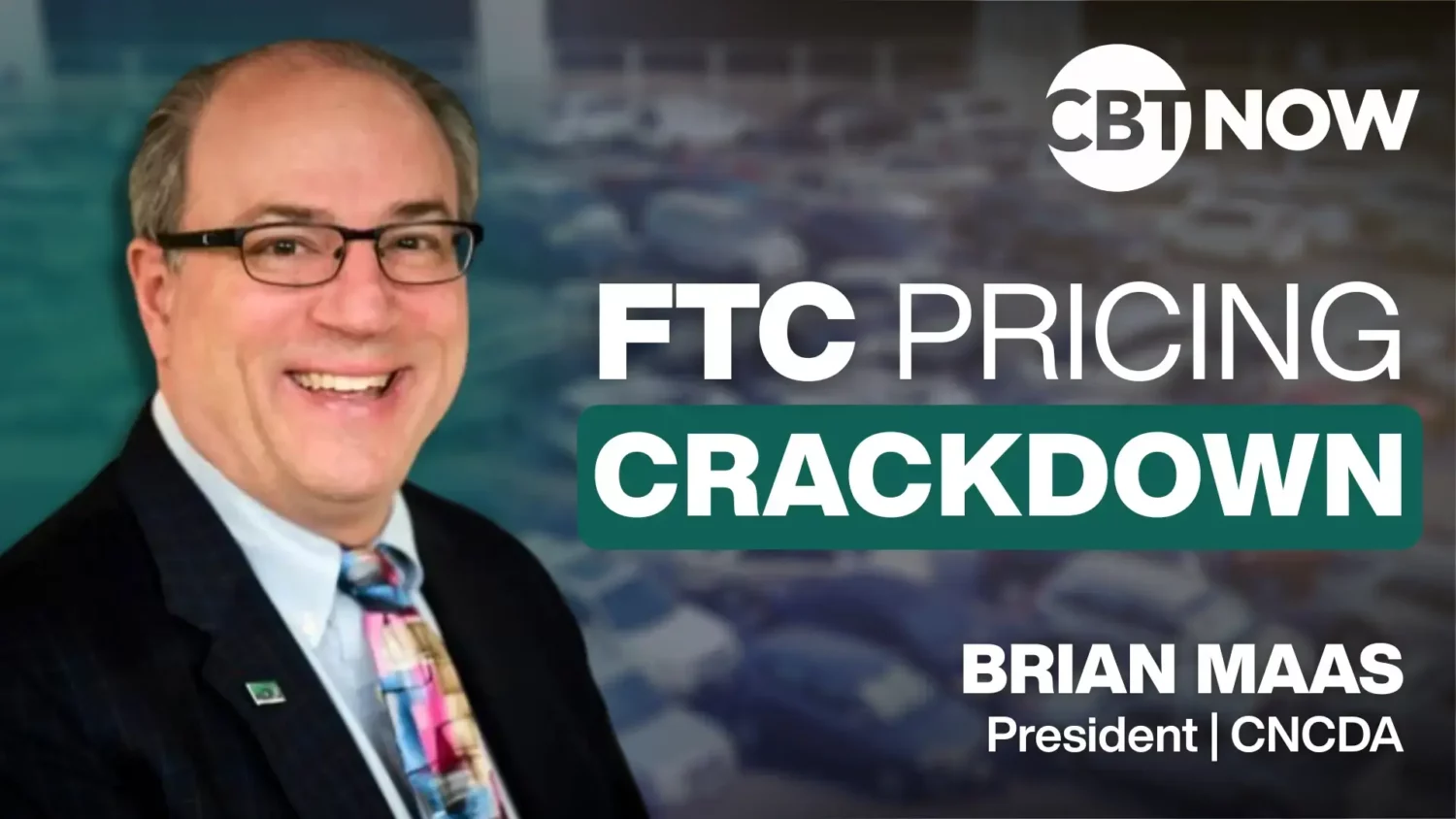
On June 16, Brian will be speaking at the CBT News Auto Leadership Summit in Washington, D.C. alongside leaders who are wrestling with the same questions the rest of us are.

Most people never figure out what actually matters until it's too late.
This episode is the keynote David delivered at ASOTUCON 2026, and it's the most personal thing he's ever said anytime in his 45 years in retail automotive. His abusive father walking out. His school counselor who told him not to bother pursuing college and being happy with any job. A Navy enlistment at a stoplight that changed everything. The dealership that outsold Mercedes-Benz nationally every year with zero advertising and generated 22x the net profit as an average dealership. And the corporate event moment focused on one single dollar that was the defining moment that transformed his career.
Most people spend a lifetime chasing the wrong thing and never realize it. David shared what he learned, the price he paid to learn it and how it can transform any individual, dealership or organization.

Available on: YouTube | Spotify | Apple Podcasts

The FTC is no longer issuing warnings; they are coming for your dealership.
In a recent conversation with Jim Fitzpatrick from @carbiztoday, we discussed the harsh reality that most stores are completely unprepared for what is next.
If the Attorney General or the DMV walks into your store today, are you one hundred percent confident they will not find a single compliance violation?
Can 100% of what the FTC stated is considered advertising - your emails, text messages, social media pages, websites, digital advertising pass their “no excuse” audit?

COMING THURSDAY:
Catch the full episode with Jim Fitzpatrick this Thursday on The David Spisak Show.
Watch or listen wherever you get your podcasts:
Available on: YouTube | Spotify | Apple Podcasts


This has been created to finally allow good dealers who have been paying the price (lost customers to unfair competition) for shady dealer’s tactics to finally have a formal & easy way to report if those dealers have failed to stop false advertising as required by the FTC regulations.

Dealers, led by vocal critics like Andy Wright, managing partner of the Vinart Auto group have long been calling for third party listing sites to take action against dealers who have routinely used deceptive practices on their marketplace sites. Looks like this conservative watchdog group is pushing to force them to take action. Personally, I don’t think it is enough - or fair - to only go after individual dealers but not hold everyone else who advertises to the same level of accountability. Direct to Consumer, OEM’s (whose offers would be clear violations if their dealers advertised the same) and yes, third party marketplaces need to all adhere to the same rules - or we have not actually fixed the problem.

You’re not seeing double - yep, this is the very same article as was in the HIT section but it may also very well be a miss because there have already been reports of SHADY dealers actually turning in HONEST dealers in the hopes of keeping their store off of the FTC’s radar. (I know - we have never seen a government program going wrong) Dealers must remain vigilant and move quickly to report notoriously unscrupulous dealers to the FTC to stop them from using this process

Here is a tough challenge for dealers to solve - because pricing and advertising offers flow through DMS systems, website providers, lead aggregators, desking tools, CRM’s and other channels you are dealing with a serious potential whack-a-mole situation here. Delays, batched data, multiple vendors involved with marketing your offers will make this an even tougher reality to manage. Trust me - you may very well need to bring on an advertising compliance audit partner.
As if doing business in California isn’t hard enough - lowest documentation fee, highest labor costs, advertising costs, facility costs, plus wage & hour laws that require dealers to pay sales associates nearly $5,000 per month even if they don’t sell any cars! And this list isn’t even close to the total list of challenges. Now they are still trying to keep “partners” like VW from using a direct-to-consumer model. On another note, VW dealers deserve much better.
About Disruptive Intelligence
Disruptive Intelligence is a biweekly newsletter that delivers dealer-tested, data-backed strategies that can be implemented at your store right away.
If you regularly take action on the information shared here, you are guaranteed to see your dealership's results improve in 2026 (and beyond).
© 2026 Disruptive Intelligence
A biweekly briefing for dealership leaders navigating the future of automotive retail.