

Welcome to Disruptive Intelligence
Disruptive Intelligence delivers dealer-tested, data-backed strategies guaranteed to improve your dealership's results in 2026 (and beyond).

OEMs have conditioned you, like Pavlov’s dogs, to hyper-fixate on your own franchise’s used cars. Every time you see a late-model [YOUR BRAND] coming off lease, you salivate.


Most dealers today aren’t truly used-car operators. Instead, they’re extensions of their new car franchise. There’s nothing inherently wrong with that… until it starts dictating your decisions in a way that limits your profitability. And that’s exactly what’s happening everywhere I look.
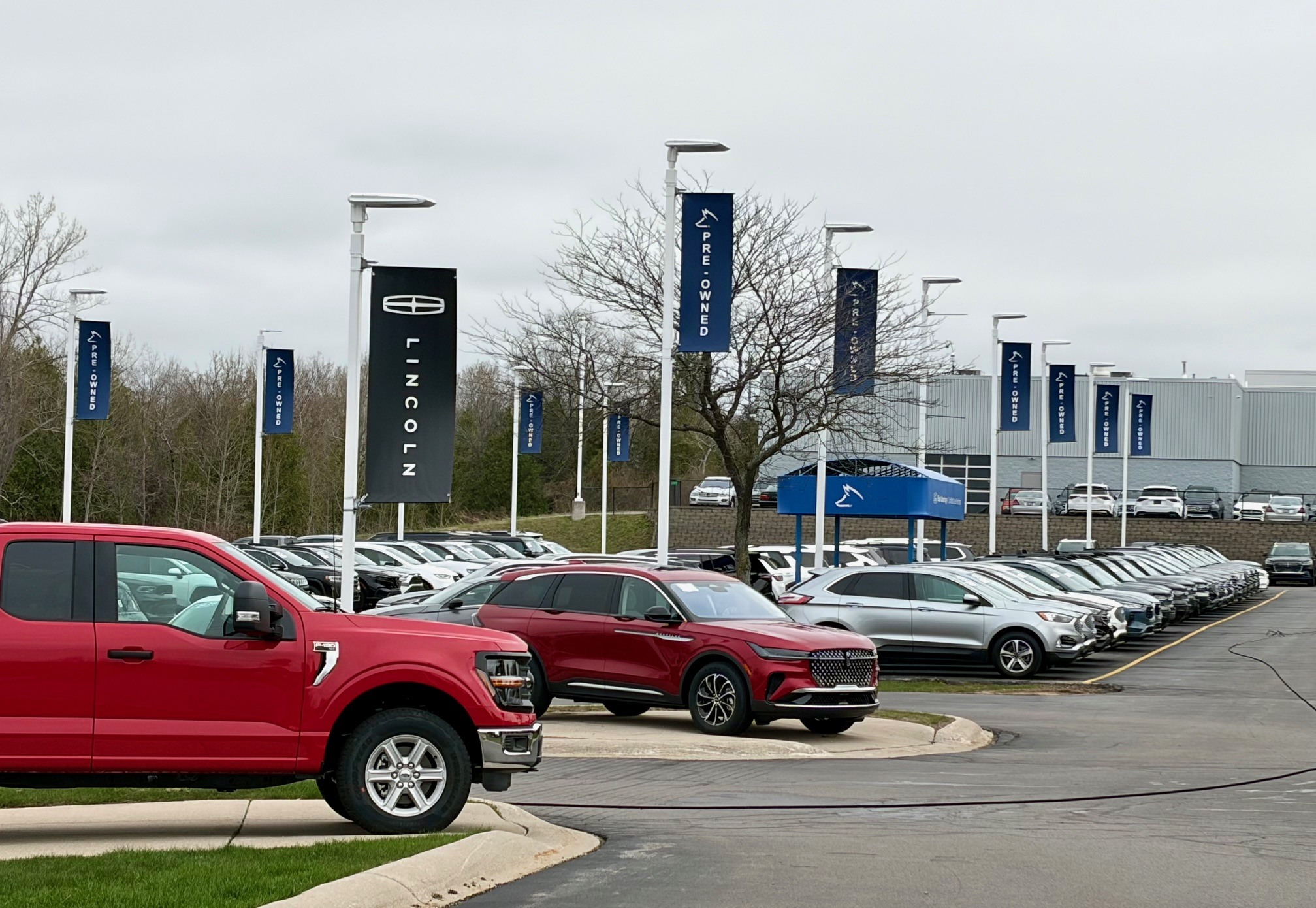
Walk into almost any dealership, and you’ll see the same pattern. A Honda store selling mostly used Hondas. A Toyota store selling mostly used Toyotas. In many cases, 70–80% of used inventory is tied directly to the franchise brand.

So how did we get here? It started years ago with OEM-driven programs designed to create more accessible entry points into their brands. Certified Pre-Owned (CPO) programs—popularized by brands beginning with Mercedes-Benz—were a smart move. They expanded the buyer funnel, built brand loyalty earlier, and created a structured path for off-lease inventory.

They layered in incentives. Below-the-line money tied to hitting specific CPO targets, including, CPO penetration, off-lease purchases, and used-car volume tied to the brand. On the surface, this looked like OEMs supporting their dealers. In practice, it changed dealers' behavior. Dealers didn’t just participate in these programs. They started optimizing around them because it became part of their total net profit dynamic.
But at what cost? As it turns out today, a huge one.

And once you start optimizing for an OEM's scorecard instead of your P&L, you stop operating like an independent business and start acting like an OEM's pre-owned distribution arm. Which wouldn’t be a problem, except… the math doesn’t work in your favor. In many cases, a non-franchise unit produces 2 to 3x the gross of a typical perceived “hot” in-brand unit. Sometimes more.
For example, at one Honda store I looked at recently, 78% of their used volume was Honda.

In other words, this Honda store's “favorite” units were its least profitable sales. To make matters worse, they’re fighting over the same fish… in the same pond… with every other dealer in their market… and wondering why it’s getting harder to make money. Meanwhile, they’re ignoring the more lucrative, less-contested profit sitting in other brands.

They take what comes from off-lease returns, ex-service loaners, brand-tied trade-ins, and OEM auctions, and build their used-car inventory around it. The problem is that’s not how the used-car market works.
When you narrow your inventory to primarily in-brand units, you’re effectively shrinking your buyer pool before the customer even walks on the lot or lands on your website. You’re choosing to compete where the competition is highest… where margins are thinnest… and where differentiation is hardest. All in the name of staying aligned with a system that was never designed to maximize your net profit.
There is not a single market in the country in which any franchise represents even 30%, 40% or 50% of the sales in any given month.

The best used-car operators in the country are equal opportunity buyers. They don’t care what badge is on the hood. They care about what the market wants, how fast it will sell, and how much money it will make. (spoiler alert - sales turn dictates how much)
OEMs have already trained you to ring the bell and chase their units. The question is: who is really benefiting from this arrangement? Them or you?
Now, this doesn’t mean you abandon your OEM programs altogether - or at all. It means you stop letting them dictate your entire strategy. Because at the end of the day, your OEM isn’t responsible for your net profit. You are.

If you’re serious about becoming a used-car dealer, this is your wake-up call. The sooner you start thinking like an independent operator, the sooner your used-car operation becomes what it should have been all along: A profit center.

One LinkedIn post in particular caught my attention this week. It’s a reminder of why what we do matters. Working in retail automotive is about more than simply selling cars and collecting profit. Matt Lasher, President of streamline.auto, reminds us in his post that the heart and soul of this industry is about making an impact in the communities we serve. Great work, Matt and team!


Paul J. Daly and Kyle Mountsier built one of the most unlikely communities in American business.
In 2020, Paul fired up a LinkedIn Live from his basement with one goal: make people in automotive feel less alone. Thousands showed up. What followed became ASOTU, More Than Cars, and a growing movement convinced that how you treat the person in front of you matters more than the transaction.
This conversation covers what Will Guidara's number one restaurant in the world teaches us about human connection, why most managers would lose a third of their team if they asked 12 simple questions, and what it looks like when an entire industry decides to stop hoarding its secrets.
Paul and Kyle are the co-founders of ASOTU and hosts of the daily automotive morning show. This is their story.

Available on: YouTube Spotify Apple Podcasts

Let’s meet up in Baltimore at ASOTU CON 2026!
This is one of my absolute favorite industry events of the year. Why? Because it’s all about impact. Not to mention, it’s a chance to network with some of the best operators, thought leaders, and innovators in the retail auto industry today.
If you can’t make it in person, make sure to join me live via my podcast, The David Spisak Show, to check out the latest innovations in the industry, attend the AI Summit, and, hopefully, catch my closing keynote on May 14th.
See you there!



This is yet another reminder that when favorable and extraordinary external factors don’t exist the new car department has no answers for the affordability issue

Like VW, Stellantis and unfortunately others, Nissan continues to be out of step with the market and their dealer partners are left again looking for answers to their already challenging situations.

About Disruptive Intelligence
Disruptive Intelligence is a biweekly newsletter that delivers dealer-tested, data-backed strategies that can be implemented at your store right away.
If you regularly take action on the information shared here, you are guaranteed to see your dealership's results improve in 2026 (and beyond).
© 2026 Disruptive Intelligence
A biweekly briefing for dealership leaders navigating the future of automotive retail.