

Presented by:

Hello Everyone!
Welcome to this week's edition of Disruptive Intelligence. In this week's issue, we explore why trust is becoming the new operating system for modern dealerships—and the strategies separating industry leaders from everyone else. Continue reading the full article below.
This issue of Disruptive Intelligence also includes:
➜ Industry Spotlight - People and ideas shaping retail automotive.
➜ Featured Podcast - The people and values that shaped Matt Leone's journey to becoming CEO of DriveCentric.
➜ Let’s Get Social - David breaks down his OEM tier list.
➜ Hits & Misses - Automotive news worth knowing before it impacts your store.
| Sorry to Disrupt You |
The Trust Economy
If you’ve spent more than five minutes in retail automotive, you know that the biggest obstacle in most transactions isn’t price, inventory, technology, or interest rates. It’s trust.
What’s remarkable is that after more than four decades in this industry—and after every technological advancement we’ve embraced—that hasn’t changed. Recently, Zach Shefska at CarEdge shared an article his father, Ray Shefska, wrote in 1983. Reading it was almost surreal. It could have been published this morning. More than forty years ago, Ray argued that trust, transparency, and fairness were at the heart of every successful retail transaction.

Forty-three years later, despite CRMs, digital retailing platforms, AI, sophisticated pricing tools, online reputation management, and virtually every other innovation imaginable, customers are still asking the same fundamental question: “Can I trust this transaction?”
That should cause every dealer to pause.
We’ve spent decades trying to solve a trust problem with better technology… Technology can improve efficiency. It can improve convenience. It can even improve communication. It cannot create trust.
Trust must be operationalized.
When Ray’s article was published, trust was personal. Customers evaluated the salesperson sitting across the desk from them. They judged whether the manager seemed honest. They decided whether the people they interacted with appeared fair and credible.
Today’s customer evaluates something very different.
The internet almost entirely eliminated the information asymmetry that once defined automotive retail. Now, consumers can compare pricing, research vehicles, evaluate competitors, read reviews, and understand market conditions before ever walking into a dealership. Companies such as CarMax and Carvana accelerated that evolution even further. While they are primarily regarded as technology companies, I believe that categorization brushes over an important lesson. Their competitive moat isn’t technology. It’s trust. Technology is simply the delivery mechanism.
Whether customers agree with every price or every policy becomes less important because they understand the process. Expectations are established up front. Decisions feel predictable. Questions are answered before they become objections. That’s a lesson worth studying.
Customers are no longer asking, “Do I trust this salesperson?”
Trust no longer lives in personalities. It lives in systems.
One of the biggest misconceptions in retail automotive is confusing disclosure with transparency. Disclosure is explaining something because regulations require it. Transparency is explaining something because your customer deserves to understand it.
That distinction matters.

Customers rarely object to a dealership earning a fair profit. They object to its uncertainty. They become skeptical when they don’t understand how a vehicle is priced, why their trade is valued a certain way, what creates a repair recommendation, or how a payment is calculated.
When people understand the reasoning behind a decision, they may not always agree with it, but they are far more likely to respect it. When they don’t understand it, every number feels arbitrary, every recommendation becomes suspect, and every transaction risks becoming adversarial.
That’s where CSI declines.
That’s where gross begins to erode.
That’s where long-term loyalty disappears.

Too many dealerships rely on “situational trust.” If the customer works with the right salesperson, the experience is outstanding. If the advisor communicates well, trust is established. If the manager is disciplined and transparent, the transaction feels fair.
That isn’t an operating system.
It’s a coin flip.
Customers shouldn’t have to hope they’re assigned to the right employee to be treated well. Every appraisal, every recommendation, every fee, every payment option, every repair explanation, and every step in the buying process should be communicated with the same level of clarity, regardless of who delivers it. This is actually where franchise dealers possess an extraordinary opportunity.
The success of Carvana and CarMax is proof that reducing uncertainty creates confidence. Franchise dealers can achieve the same objective while adding advantages that those companies cannot replicate: local relationships, human expertise, factory-trained personnel, service capability, and long-term community presence. When institutional transparency is combined with those strengths, franchise dealers become extraordinarily difficult to compete against.
- Show the evidence behind every decision, not just the conclusion.
- Share inspection reports, service videos, recon documentation, and market pricing data.
- Clearly explain the deal structure before customers have to ask.
- Replace assumptions with facts to eliminate unnecessary doubt.
- Every employee should understand both what the dealership does and why.
- Simple explanations demonstrate confidence and clarity.
- Customers immediately recognize confusion or uncertainty.
- Understanding builds credibility and trust.
- FedEx, Apple, and Starbucks deliver consistency through systems.
- Trust should never depend on which employee a customer happens to get.
- Embed trust into appraisal standards, pricing philosophy, service write-ups, F&I presentations, training, and leadership expectations.
- Consistency is engineered, not left to chance.
- Study customer complaints, not just what they are, but why they happen.
- Look beyond review scores to identify recurring sources of confusion.
- Track where customers abandon the buying process.
- Use patterns, not intuition, to continuously improve trust.
If trust remains an abstract concept, it will always produce inconsistent results.
If it becomes an operating variable, it can be measured, managed, and continuously improved.
One of the most dangerous misconceptions in business is that trust is somehow a soft concept.
It isn’t.

Trust protects margins because customers understand what they’re paying for. It shortens transaction times because fewer decisions require unnecessary negotiation. It improves customer retention, referral activity, associate retention, reputation, and long-term profitability. Looking back, I have become convinced that many of the outcomes organizations pursue—market share growth, customer loyalty, employee retention, and sustained financial performance—are often downstream consequences of trust rather than independent achievements.

The opposite is equally true.
Mistrust is extraordinarily expensive. It appears as unnecessary discounting, one-time buyers, negative reviews, declining conversion rates, regulatory scrutiny, and ever-increasing marketing expenses in an attempt to replace customers who should never have left in the first place.
You cannot out-advertise a trust problem.
Eventually, the economics always catch up.
More than forty years ago, Ray Shefska recognized that trust was an economic asset. That idea has become even more important today.
The dealerships that will define the next decade won’t necessarily be the ones with the newest technology, the largest facilities, or the biggest advertising budgets. They’ll be the organizations that intentionally engineer trust into every process, conversation, recommendation, and customer interaction.
Every dealership already has an operating system. The question is whether trust lies at the center of it. When it does, customers stop wondering whether they can trust the transaction and begin looking forward to doing business with your dealership again. That’s where sustained market-share growth begins. That’s where exceptional associate retention becomes possible. That’s where long-term client relationships are built. And ultimately, that’s where franchise dealers create an advantage that no technology platform, disruptor, or competitor can easily replicate.
Trust isn’t simply the outcome of a great dealership.
It’s the operating system that creates one.
Ready to make trust your dealership’s greatest competitive advantage? Schedule a conversation with my team to discuss what that transformation can look like within your organization.
| Industry Spotlight |

Read that headline again. "It Takes Two To Make a Trustworthy Transaction," written in 1983. Ray Shefska was making the case for transparency and trust before most of this industry was born, and he paid for it with nights, weekends, and moments with his family he never got back. Zach, thank you for sharing this. It’s a gut punch, and it should be.
Ray named the three objections every customer walked in with in 1983: price too high, trade too low, everybody knows someone who got shystered. Now read your own CSI comments from last month. Same three. We’ve had this warning for 42 years. Blockbuster, Yellow Cab, Kodak. None of them died broke or stupid. They died refusing to give people the faster, simpler, more honest experience they were already begging for. We are not exempt.
So stop treating trust and transparency as a compliance box or a marketing line. It’s the price of admission to the next decade. The customer’s ask hasn’t changed since 1983: know the price, respect my time, earn my trust. Deliver it and you own your market. Keep defending the friction and you’ll get exactly the future you’re choosing. One man has carried this torch consistently for nearly 50 years. It’s time we, as an industry, joined him.
| Featured Podcast |
The FTC Trap Dealers Are Walking Into
The letters went out. 97 of them. And buried inside each one is a compliance framework so broad, so technically demanding, that a single sold car, still live on your website three hours later, could cost you half a million dollars.
Jim Fitzpatrick sits down with David Spisak, CEO of Disruptive Growth Solutions, and they don't soften it. Sixteen categories of violations. Salespeople's Instagram posts counted as advertising. Third-party listings you don't control triggering fines you can't afford. Vendors with zero legal exposure leaving dealers to absorb every hit alone.

Available on: Youtube | Spotify | Apple Podcasts
| Let's Get Social |
The ultimate Car Brand Tier List begins!
We are putting the industry’s biggest manufacturers on the chopping block, evaluating them on dealer relationships, affordability, and market trajectory.
We kick things off with a massive legacy heavyweight: Ford. Do they still hold an elite spot, or have they fallen behind the pack? Plus, we break down why one major brand secures a comfortable spot near the top, while another household name gets handed a brutal F-tier ranking.

| Hits & Misses |


▲ HIT - Good for Dealers


This is the whole thesis of this issue in one data set. Trust is rising but only for the dealers actually earning it with transparency. That 99% who still doubt they’ll get a fair price That’s not a threat, that’s your opening. The goodwill is walking in the door higher than it’s been in years. The only question is whether your process confirms it or blows it.
— DS
▲ HIT - Good for Dealers


While everyone doom-scrolls the affordability headlines, there’s a traffic-driving story hiding in plain sight: the incentives are the fattest they’ve been in years. Zero percent and five-figure rebates are a reason to call your database today, not next quarter. The dealers who frame this moment as ‘the deal window is open’ transparently, with the real all-in number will pull share from the ones sitting on their hands waiting for the market to feel better.
— DS

▼ Miss - Hard on Dealers
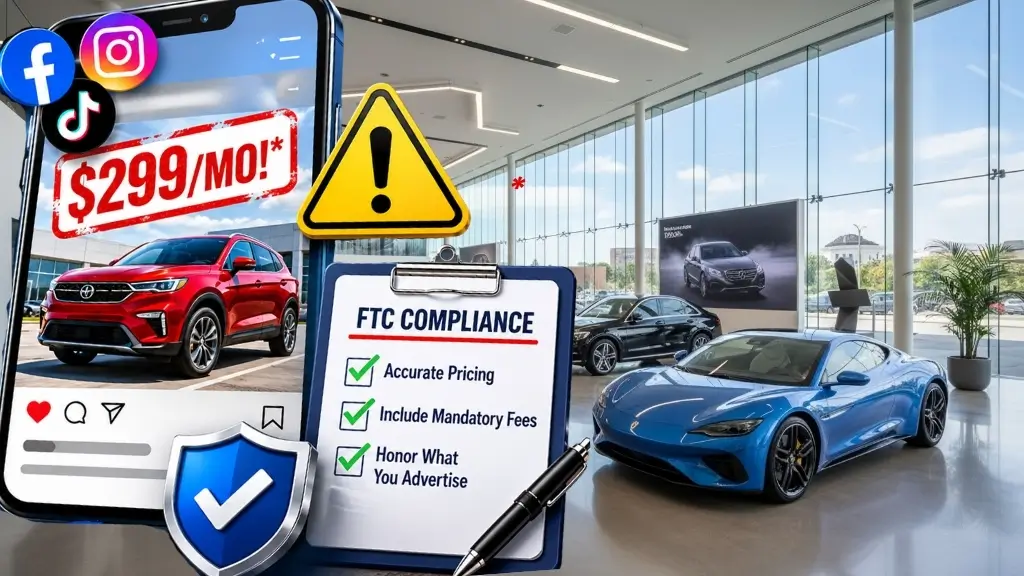

Here’s the uncomfortable part nobody wants to say out loud: your compliance exposure now runs through a 23-year-old social coordinator posting ‘$399/month!’ at 9pm. That post is a binding offer. One screenshot is the evidence. Trust isn’t just what happens in the F&I office anymore, it’s every price your store has ever published, and the internet never forgets.
— DS
▼ Miss - Hard on Dealers
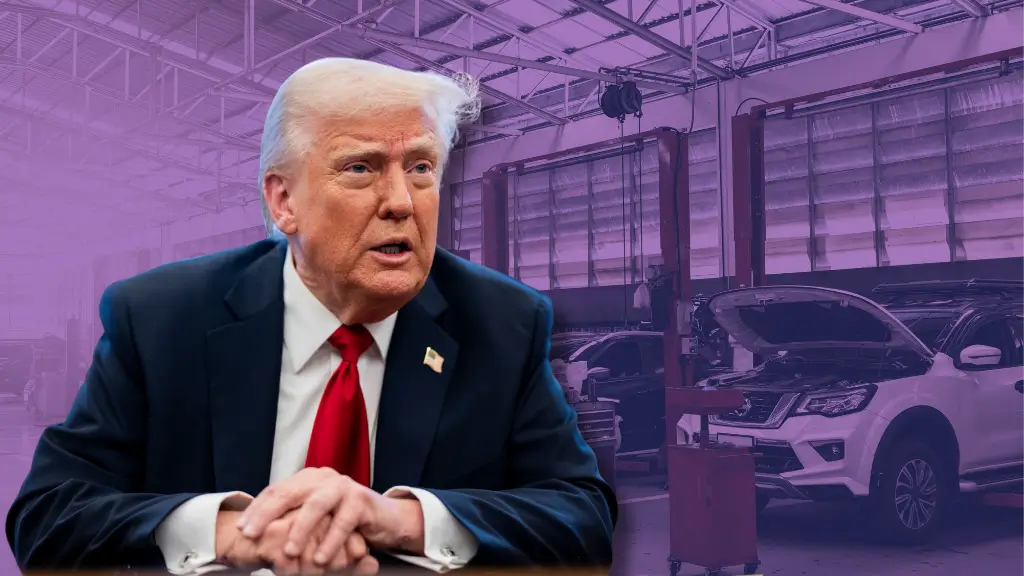

This one has everything you could imagine - a sitting president, a slogan everyday people actually cheer for, and your franchise’s trade association on the losing side of the headline. ‘Freedom to Fix’ polls at 90%. Try arguing against it at a cookout. The fixed ops and parts implications are real, but the bigger lesson is positioning: dealers got cast as the villain protecting a monopoly. When you’re explaining, you’re losing and right now the industry is explaining. The salt in the wound is that independents who already have approximately 80% of all service/repair business will benefit.
— DS
About Disruptive Intelligence
Disruptive Intelligence is a biweekly newsletter that delivers dealer-tested, data-backed strategies that can be implemented at your store right away.
If you regularly take action on the information shared here, you are guaranteed to see your dealership's results improve in 2026 (and beyond).
© 2026 Disruptive Intelligence
A biweekly briefing for dealership leaders navigating the future of automotive retail.