
Presented by  |
Hello Everyone!
AI is changing how customers find, compare and choose dealerships. This issue explores what it takes to earn the recommendation, build trust and make your business more worthy of the advertising.
In this issue:
➜ Sorry to Disrupt You AI is changing what it takes to win customers. (6 min) | ➜ The Playbook Eight steps to earn the AI recommendation. (3 min) |
➜ Industry Spotlight Kirthiga Reddy asks whether AI can find your business. (1.5 min) | ➜ Featured Podcast Brian Kramer explains why AI search skips dealerships. (1 min) |
➜ Let’s Get Social AI looks beyond your dealership’s star rating. (45 sec) | ➜ Hits & Misses What’s Working, What Isn’t, and Why It Matters. (6 min) |
Thanks for reading!
| Sorry to Disrupt You |
The End of Marketing as We Know It
What Dealerships Must Do Now to Stay Visible, Relevant, and Recommended in 2027

In 1999, Sergio Zyman published a book titled The End of Marketing as We Know It.
Twenty-seven years later, automotive marketing is approaching another ending.
For decades, the formula was straightforward: spend enough money to get noticed. Buy the radio. Own the billboards. Outbid competitors in paid search. Flood social media. Drive people to your website. Generate leads. Work the funnel.
Did that make you the best dealer in your market? No. Could it make you one of the most visible? Absolutely.
AI is not simply creating another marketing channel. It is beginning to sit between the customer and the dealership, researching, comparing, recommending, and increasingly acting on the customer's behalf before the dealer even knows a shopper exists.
Advertising can buy exposure. It cannot guarantee recommendation.
The Customer May Never Enter Your Funnel

Cox Automotive reports that 63% of in-market shoppers say they definitely or probably will use AI during their next vehicle purchase. AI tools are already used by 36% of shoppers as a research channel, nearly equal to automotive-specific websites at 38%. Yet only 29% of dealers say they have begun adapting for AI-powered search.
Consumers have moved faster than dealerships.
Pew Research found that when Google displays an AI summary, users click a traditional search result only 8% of the time, versus 15% without one. In a 2026 analysis of 69 dealership clients, SmartSites reported organic sessions on comparable properties down 31% year over year, while inventory and shopping pages held up substantially better than generic informational content.
That does not automatically mean fewer buyers. It can mean more of the decision happened before the website visit.

A customer may research three SUVs in AI, compare ownership costs, ask which dealership has the strongest reputation, and then search your store by name, call you, or walk in. Your analytics may call that Direct, Organic, Phone or Walk-In.
AI may have created the decision.
AI referral traffic can remain small while AI influence becomes enormous.
Your website therefore does not become irrelevant. Its role expands from destination to machine-readable source of truth for inventory, pricing, services, expertise and reputation.
Your Next Lead May Not Be a Person

According to CarEdge CEO Zach Shefska in a recorded podcast this week, its AI agents have already completed more than 160,000 interactions with dealerships, with more than 70% of those interactions converting into vehicles purchased.
Think about that.
Your next customer may shop ten dealerships without personally contacting a single one.
An AI agent can request out-the-door pricing, ask follow-up questions, challenge fees, compare offers and continue negotiating while the buyer remains anonymous. It can also expose something traditional advertising often obscured: how the dealership actually behaves.
Slow response. Hidden fees. Inconsistent pricing. Unnecessary friction. Poor transparency.
AI does not just consume your marketing. It can audit the business behind it.
CarEdge's public reporting already documents more than 154,000 AI negotiations and nearly 1.45 million agent messages sent to dealerships.
Service May Be the Bigger Opportunity

If this sounds like a sales-department issue, that would be a serious mistake.
Cox Automotive found that 16% of consumers already used an AI website or tool during their most recent service journey. Among them, 48% used AI to help determine what services their vehicle might need. At the same time, dealership share of service visits has fallen from 33% to 29%, even while dealer fixed-operations revenue reached record levels. Dealers are competing against nearly 299,000 general repair businesses.
Do I really need this repair? What should it cost? Who nearby specializes in my vehicle? Which service department has the best reputation? Can I trust their recommendations?
AI can help answer those questions before your advisor ever speaks with the customer.
That means service pricing is marketing. Appointment availability is marketing. Technician expertise is marketing. MPI transparency is marketing. Status communication is marketing. The experience that determines whether a customer returns is marketing.
More importantly, AI can reopen the consideration set every time a service need occurs. In practical terms, every repair opportunity can become a re-acquisition event.
Dealers that think GEO belongs only to advertising have misunderstood the opportunity.
Forget SEO? Not Quite. But You Need GEO.

SEO still matters. Paid media still matters. Your website still matters. But none of them guarantees recommendation.
Generative Engine Optimization asks a more important question:
When somebody asks AI where to buy a vehicle or where to service one, what evidence exists to support recommending us?
I would reduce the GEO conversation to three questions.
Can AI find you? Inventory, services, pricing, hours, location and structured information must be current and accessible.
Can AI understand you? It needs credible information about what you sell, what you service, what you specialize in and why you are relevant.
Does AI trust you enough to recommend you? Reviews, third-party mentions, transparent pricing, consistency, expertise and actual customer experiences become evidence.
For years, marketers created the message. AI increasingly evaluates the proof behind it.
Value Beats Volume

Dealers should publish more, but not more garbage.
Another generic article explaining how to pair Bluetooth is easy for AI to summarize without sending someone to your website. SmartSites' dealership data found that blog, how-to and guide pages retained only 45% of their prior-year clicks, while inventory pages retained 80%.
Publish knowledge only you can credibly own.
What are buyers actually paying in your market? Which vehicles are retaining value? What are your technicians seeing repeatedly? What does a common repair really cost? Which maintenance decisions prevent expensive failures?
Useful first-party expertise creates authority. Volume creates noise.
The Marketing Department No Longer Owns Marketing

This is the part some dealers and agencies may not want to hear.
If customers consistently complain about hidden fees, misleading prices, slow communication or a bad service experience, GEO will not fix it. Neither will another campaign or 20 articles explaining why you are the best dealership in town.
You have to fix the underlying business.
For decades, dealerships could compensate for weaknesses by spending more. Poor retention? Buy more leads. Weak word of mouth? Increase advertising. Mediocre reputation? Promote a different message.
AI makes that increasingly difficult because the gap between what you say and what customers experience becomes easier to discover.
Pricing is marketing. Response time is marketing. Service experience is marketing. Employee behavior is marketing. Transparency is marketing. Reputation is marketing.
The most important marketing investments a dealership makes in 2027 may not appear in the marketing budget at all.
What I Would Do Monday Morning

Put the dealer, GM, marketing director, service director and agency in the same room.
Ask AI the questions customers are likely to ask about buying and servicing vehicles in your market. See who gets recommended and why. Mystery-shop your own sales and service departments. Test response speed, pricing clarity and whether an anonymous shopper can get what they need.
Then challenge your measurement. Traffic, VDPs and leads still matter, but so do branded search, calls, appointments, retention, reviews, service acquisition, customer lifetime value and where your dealership appears in AI recommendations.
Ask your agency one more question:
If AI influences a customer who never clicks an AI referral link, how are you accounting for that?
Do not cancel your advertising.
Make the business more worthy of the advertising.
The End of Marketing as We Know It

The dealerships that win in 2027 will still advertise. They will still invest in websites, search, social media and technology.
But the best will understand something others will miss:
Marketing is no longer just the department responsible for creating demand.
Marketing is increasingly the cumulative evidence of how the entire dealership operates.
For decades, dealers asked: How much can we spend to get in front of buyers?
The better question now is:
When a customer asks AI where they should buy or service a vehicle, why should it recommend us?
If your leadership team cannot answer that question today, put this article on the agenda for your next management meeting.
Then start fixing the answer tomorrow.

| The Playbook |
DGS AI-ERA MARKETING PLAYBOOK
8 steps to make your dealership findable, understandable and recommendable when AI sits between you and the customer.
01 | Run the AI Recommendation Audit Ask the AI tools your customers use the buying and service questions they actually ask in your market. Record who gets recommended, what evidence is cited and where your store is missing or misrepresented. Repeat monthly. |
02 | Mystery-Shop Yourself Like an AI Agent Send anonymous requests for out-the-door pricing, fee explanations and service quotes to your own sales and service departments. Measure response speed, price consistency and whether a shopper gets a straight answer without giving up their identity. |
03 | Fix the Business Before the Message Remove the friction AI will surface first: unexplained or hidden fees, prices that differ between website, marketplace and desk, slow responses and poor service status communication. GEO cannot cover what the operation gets wrong. |
04 | Make Your Website the Machine-Readable Source of Truth Keep inventory, pricing, service menus, hours, specialties and certifications current, structured and identical everywhere they appear. If AI cannot find and understand it, it cannot recommend it. |
05 | Treat Every Repair as a Re-Acquisition Event Publish transparent service pricing, real appointment availability, technician expertise and MPI evidence. Every service need reopens the customer's consideration set, and AI is answering the question before your advisor does. |
06 | Publish Knowledge Only You Can Own Replace generic how-to content with first-party expertise: what buyers are actually paying in your market, which vehicles hold value, what your technicians see repeatedly and what common repairs really cost. |
07 | Manage Trust as Evidence Treat reviews, third-party mentions, pricing transparency and consistent customer experience as one program with an owner, monthly targets and accountability across sales, service and F&I. |
08 | Rebuild Measurement and Hold Your Agency to It Add branded search, calls, appointments, retention, service acquisition, customer lifetime value and AI visibility to the scorecard. Require your agency to explain how it accounts for AI-influenced customers who never click a link. |
OPERATING PRINCIPLE Do not cancel your advertising. Make the business more worthy of the advertising. |
| Industry Spotlight |

Ronak Parikh at The AI Discovery Shift. Photo: Kirthiga Reddy / LinkedIn.
Kirthiga Reddy shares a warning from WPP Media’s Ronak Parikh: a major consumer-goods brand audited its AI visibility and found itself missing from the top five results. The lesson reaches beyond any one industry. AI combines information from search, commerce, websites, content and PR when it answers a customer’s question. Reddy argues that brands need a coordinated strategy across those functions, rather than treating AI visibility as one more channel to optimize. Her challenge: audit what AI says about your brand, understand why, and assign resources to fix the gaps.
DAVID’S TAKE This is a consumer brand story, and it is the clearest warning a dealer principal will read this month. The brand did not know it was invisible until it ran an AI visibility audit. Ronak Parikh's point is the one that matters for dealers: AI “sees them as one information pool and assembles an answer from all of it.” In a dealership, that pool is not just marketing. It is your website, your inventory data, your reviews, your pricing, your service experience and what customers say about you on other sites. When did your store last run an AI visibility audit? If the answer is never, you already know your next management meeting agenda item. — DS |
| Featured Podcast |
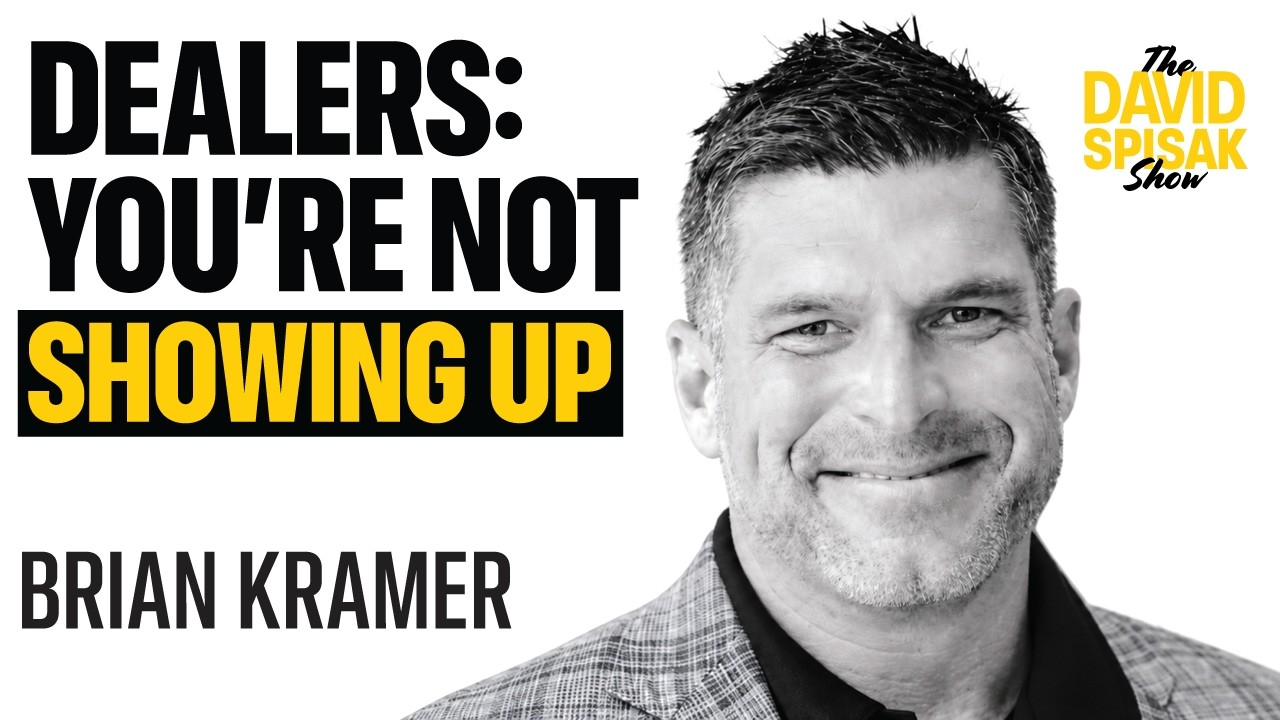 |
Brian Kramer: Why AI Search Is Skipping Your Dealership
October 15 • 1h 23m
Brian Kramer, Executive Vice President at Cars Commerce and a former dealership general manager, joins David to examine why dealers can spend more on technology and advertising yet still lose business they never see.
They discuss how inconsistencies in a dealership’s online presence can undermine AI visibility, where lead pipelines break down, and why adding AI tools cannot solve disconnected data or a poor customer experience. Brian and David also share lessons from their Carvana visit and consider how dealership roles need to evolve.
Why it belongs in this issue: earning an AI recommendation depends on the business behind the message. This conversation connects search visibility with the everyday operations that help a dealership earn customer trust.
| Connect with Brian Kramer | |
|

Listen to the full episode on: YouTube | Spotify | Apple Podcasts
| Let's Get Social |
Are your online reviews actually fooling anyone?
AI is changing how customers evaluate your dealership’s reputation. In this clip, I describe a South Florida dealership with nearly 5,000 Google reviews and a 4.6 rating. An AI search also surfaced 88 unresolved Better Business Bureau complaints, raising questions that the star rating alone could not answer.
We are moving from a quick visual check of a business to a deeper examination of its entire digital footprint. Reviews, complaints and customer experiences all contribute to the picture.
Watch the full clip to see why a strong rating needs to be backed by a trustworthy business.
How is your dealership preparing for this shift? Join the conversation in the comments.

| Hits & Misses |


▲ HIT - Good for Dealers
 |
| Aïda Amer / Axios |
Jim VandeHei's C-suite briefing with Profound CEO James Cadwallader has one line every dealer should hand the marketing director: “Agents want boring specifics.” Per Profound's data, RunRepeat, a running-shoe review site, outranks Nike.com, Reddit and Wikipedia as an AI source because it is obsessively specific and well structured.
DAVID’S TAKE Now translate that to your store. Trim-level detail. Real photos. Current prices with every fee included. Service menus with real prices. Technician certifications. Hours that are actually correct. The dealer with the most precise, structured truth can beat the dealer with the biggest budget. That is the GEO opportunity in one sentence. — DS |
▲ HIT - Good for Dealers
 |
| Ben Sporn / VIP Auto Group |
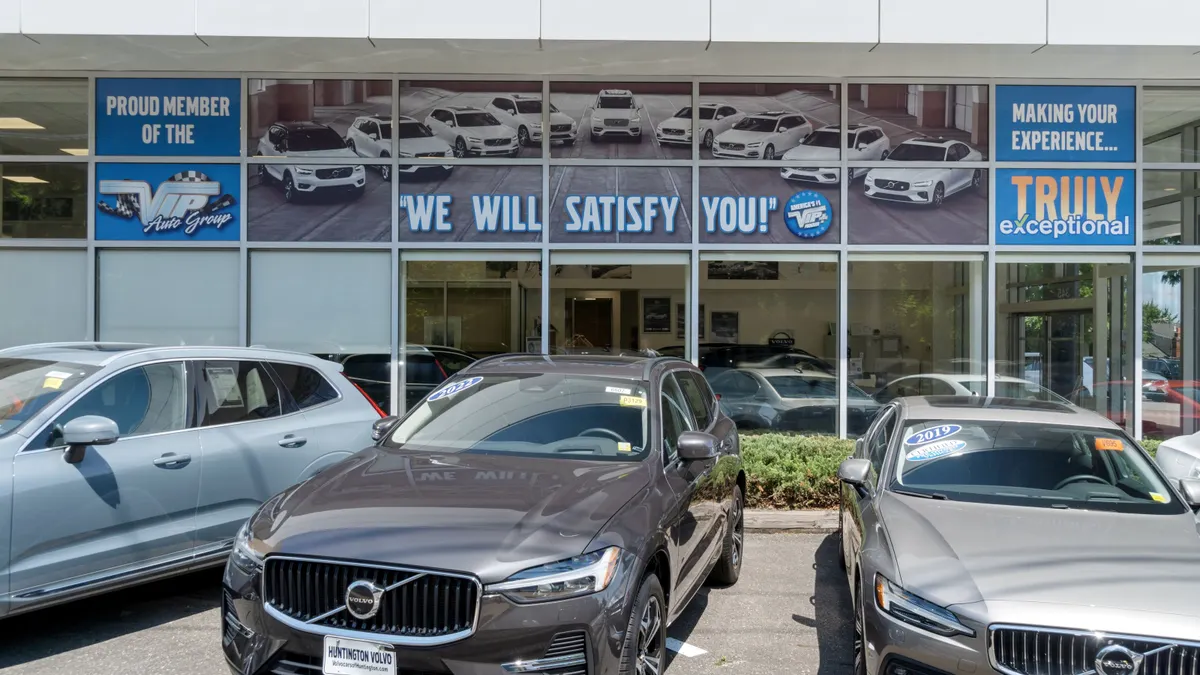
VIP Auto Group's CMO, Ben Sporn, is the clearest proof in this issue that the marketing department no longer owns marketing. His biggest wins did not come from the media plan. They came from the business. “We were spending half a million dollars easily on software that we've replaced internally.” AI tools that tripled customer service ticket handling. A declined-services list that gives the service manager back about two hours a day. Automatic responses to five-star Google reviews. Ten rooftops, 15 brands and no staff cuts.
DAVID’S TAKE That is a marketing leader making the dealership more worthy of the advertising. Every CMO should be measured against the same standard. — DS |
▲ HIT - Good for Dealers
 |
| stock.adobe.com / Digital Dealer |
This is the practical answer to the question I told you to ask your agency. Google has cut the minimum budget for its incrementality experiments from roughly $100,000 to $5,000, which puts real testing within reach of a single rooftop. Incrementality asks the only question that matters: would this sale have happened without the ad? Mazda Motor of America's Meta campaign returned a 3.5X incremental return on ad spend and cut cost per incremental sale by 64%.
DAVID’S TAKE Last-click attribution keeps paying for sales you already won. If your agency cannot show you incremental results, you are funding its reporting, not your growth. — DS |
▲ HIT - Good for Dealers
 |
| CBT News |
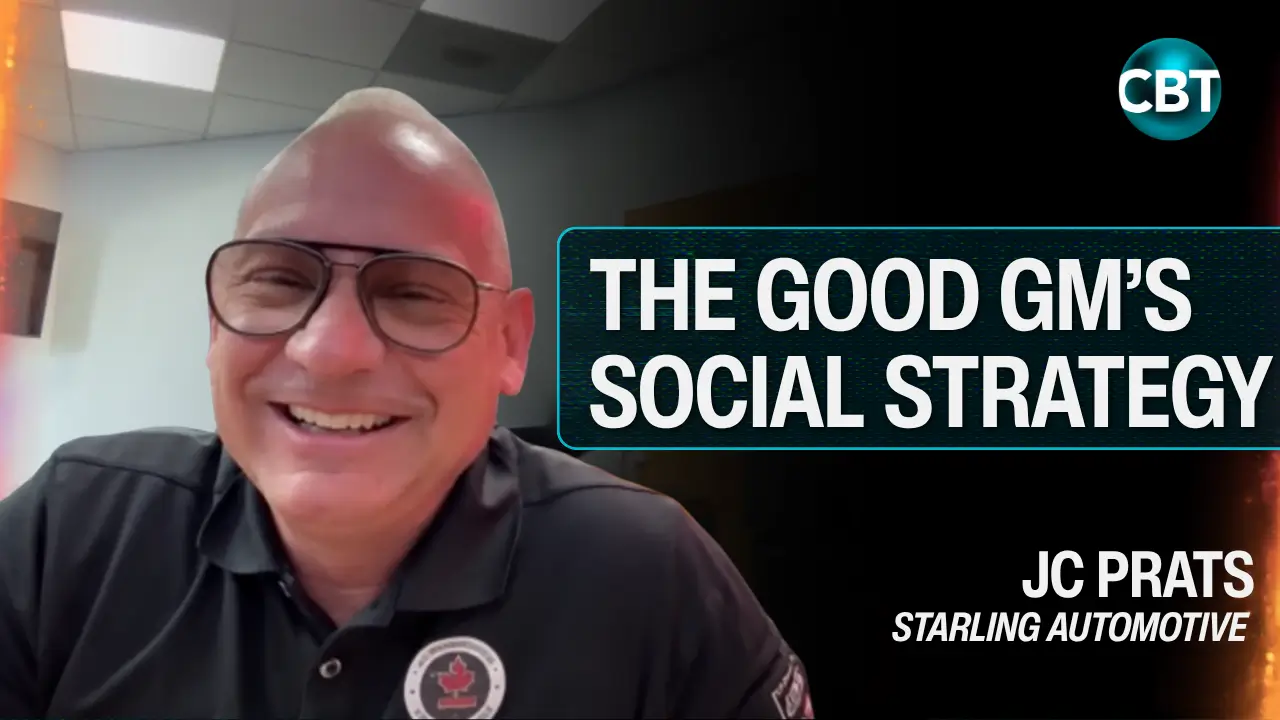
JC Prats, the executive general manager at Starling Automotive known online as The Good GM, creates around four to five videos a week built on real dealership experiences, not polished ads. The result is reach to customers and employees far beyond his market, and a store that went from worst-performing to the top Buick GMC store in its district.
DAVID’S TAKE The article does not isolate how much of that turnaround came from social, and I will not pretend it does. The lesson still holds. Authentic, first-party expertise is evidence that customers and AI both trust. Volume creates noise. A credible GM with a camera creates authority. — DS |

▼ Miss - Hard on Dealers
 |
| Smith Collection/Gado / Getty Images |
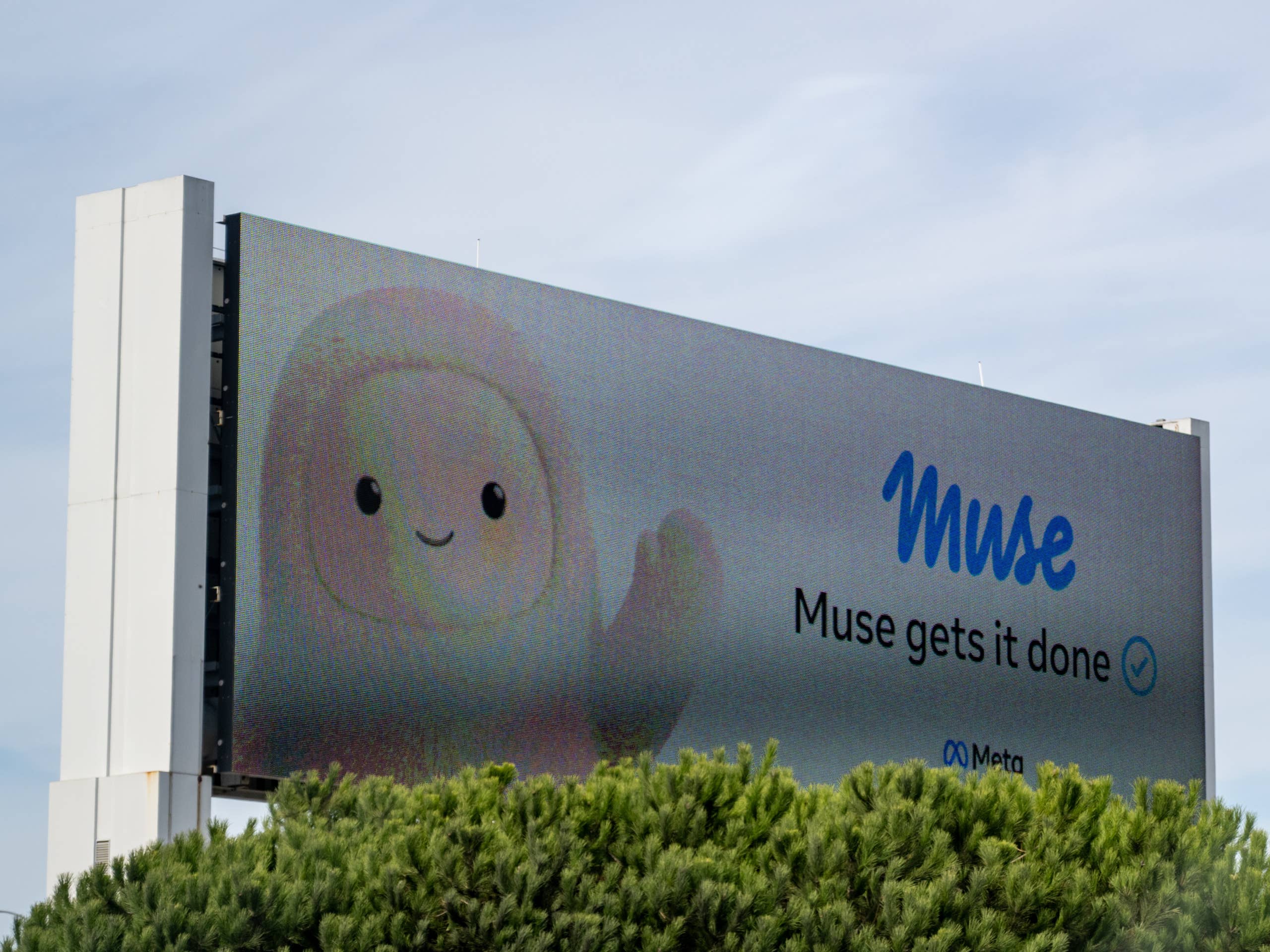
Wall Street has started pricing in AI shopping agents, and it named names. A Morgan Stanley note covered by TheStreet flags six franchise groups as more challenged: Asbury, AutoNation, Group 1, Lithia, Penske and Sonic. Meta launched its Muse personal agent on September 8. The analysts estimate CarMax will earn about $740 less gross profit per vehicle than Carvana in 2026, with franchise dealers trailing by about $1,100.
DAVID’S TAKE My take: an AI agent can only squeeze a store whose pricing, fees and response process are inconsistent. Agents do not punish dealers. They punish friction. Fix the operation and the agent becomes a buyer, not a threat. — DS |
▼ Miss - Hard on Dealers
 |
| CBT News |
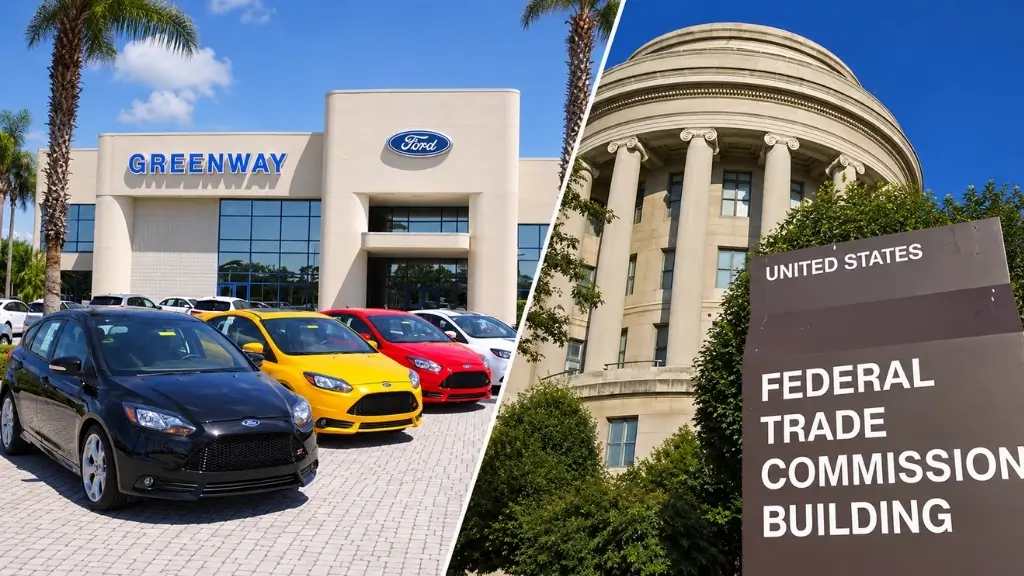
The FTC's case against Greenway Auto Group, one of the 97 dealership groups that received a warning letter in March, should end the debate. The agency alleges Greenway charged consumers more than $3,350 over the advertised price, on average, in over 92% of transactions, through administrative, dealer, delivery and processing fees. The detail that matters most: after the warning letter, the complaint says Greenway added price-transparency claims to its websites while continuing to advertise prices well below actual costs. These are allegations, and the order still needs court approval.
DAVID’S TAKE But understand the point. Saying transparent is marketing. Being transparent is the business. AI and regulators now check both. — DS |
▼ Miss - Hard on Dealers
 |
| Getty Images / Retail Dive |
A SmartCustomer survey of nearly 1,200 U.S. consumers found 76% used AI to make purchases in the past year, yet 89% do not fully trust AI recommendations and one-third regretted a purchase an AI recommended. The number dealers should study: 53% suspect companies of publishing false or misleading information to influence AI recommendations.
DAVID’S TAKE That is the trap in the GEO gold rush. Treat AI visibility as a trick and you will win the recommendation and lose the customer the moment the experience does not match. The only durable GEO strategy is making sure what AI says about you is true when the customer arrives. — DS |
▼ Miss - Hard on Dealers
 |
| Justin Sullivan / Getty Images |
Pied Piper's 2026 service scheduling study gave Volkswagen dealers the top ranking, and that deserves credit. Now look at the comparison that matters. Independent service centers put an advisor on the line in an average of 38 seconds versus 66 seconds for dealerships, and offered the earliest phone appointment in 1.3 days versus 2.9.
DAVID’S TAKE When a customer asks AI where to get a repair done nearby, availability and speed are part of the evidence. Every repair is a re-acquisition event, and independents are winning it on the phone. Appointment availability is marketing, whether or not your marketing department controls it. — DS |
About Disruptive Intelligence
Disruptive Intelligence is a biweekly newsletter delivering dealer-tested, data-backed strategies you can implement at your store right away. Take action on what's here and you're guaranteed to see your dealership's results improve in 2026 (and beyond).
© 2026 Disruptive Intelligence