
Welcome,
Issues 11 and 12 were about AI: first as a leadership shift, then as a technology-stack problem. This issue steps back and looks at the whole business. Every assumption the traditional dealership was built on is losing its grip at the same time, and the gap between operators who adapt and operators who defend the old model is going to compound faster than most leaders expect.
PRESENTED BY:

➜ The Playbook - Seven Moves for the Next Dealership (3 min)
➜ Industry Spotlight - Skip the Salesperson. Keep the Dealership. (1.5 min)
➜ Featured Podcast - Erikka Tiffani Wells – “From $6 An Hour To GM. (1 min)
➜ Let’s Get Social - Brian Kramer: Empty Showroom. 100+ Cars a Month. (45 sec)
➜ Hits & Misses - What’s Working, What Isn’t, and Why It Matters. (6 min)
Thanks for reading! (Total Read: 18 min)
| Sorry to Disrupt You |
The End of Dealerships as We Know It
The dealership is not going away. But the operating model most of us grew up with is.
For decades, the traditional dealership business was built around a fairly dependable set of assumptions: new cars drove the enterprise, geography defined the market, trade-ins supplied used inventory, customers adapted to the dealership’s process, and technology was something you added to the business rather than something that forced you to redesign it.
One by one, those assumptions are becoming less dependable.
That doesn’t mean dealerships are dying. It means the dealership we’ve known for decades is being replaced by something fundamentally different.

The Economics That Built the Traditional Dealership Are Changing
New-car economics will continue to be shaped by forces dealers do not control: OEM strategy, production, incentives, interest rates, tariffs and inventory. Affordability may be the most important pressure of all.
Cox Automotive data shows that households earning under $100,000 represented 50% of new-car buyers in 2020. By 2025, that had fallen to 37%. That does not mean every displaced buyer moved to used. Some did. Others delayed replacing their vehicle altogether. But the message is unmistakable: the addressable new-car buyer is changing. Cox Automotive Inc.

At the same time, the average vehicle on American roads is now 12.8 years old. Consumers are holding on to vehicles longer, and the used-car market is dealing with the downstream effect of lower new-vehicle sales during prior years, fewer lease returns and aggressive used-car acquisition by national competitors. S&P Global
This is not a temporary inconvenience. It changes where profit, inventory and opportunity come from.
Your Market Is No Longer Ten Miles Wide
A dealer’s competition used to be defined largely by geography. If you had the right franchise in the right location, that location itself created a meaningful moat.
Today, when a customer searches for a late-model RAV4, F-150 or Tahoe, the competitive set can include dozens or hundreds of vehicles far outside the dealer’s historical trade area. Price, reviews, photos, availability, process and trust can matter more than mileage from the customer’s home.
Location still matters. It matters for convenience, service retention, brand representation and real estate value.
A store 45 miles away, or two states away, with a better vehicle, better presentation and easier process can become your customer’s first choice before you even know that customer exists.

The Tale of Two Dealerships
Give two dealers essentially the same opportunity today, and five years from now you can have two completely different businesses.
Dealership A went all in on used-car operations. Dealership B remained dependent on new cars and the OEM.
Dealership A treats fixed operations as an economic engine. Dealership B still treats service like the ugly stepchild, physically and strategically relegated to the back of the building.
Dealership A redesigns processes so technology removes friction and makes people more productive. Dealership B buys another tool, then another, then another, always searching for the next magic bullet.
Dealership A asks how AI can make every person in the organization dramatically more capable. Dealership B asks how AI can reduce headcount.
Those differences do not simply add up.
They compound.

The future will not be defined primarily by big dealer groups versus small dealers. It will be defined by capable operators versus incapable ones.
The Gap Will Compound
The industry is already consolidating. NADA reports 16,990 franchised light-vehicle dealers in the United States for 2025. Kerrigan Advisors reported a record 458 dealership transactions in 2025 involving nearly 700 franchises. NADA
Scale is part of the story because capital helps dealers invest in technology, talent, brand and acquisitions.
But scale alone is not the answer.
Better operators attract better people. Better people create better processes and customer experiences. Better experiences strengthen reputation and organic demand. That lowers the relative cost of acquisition, creates more capital, and gives the operator more ability to invest and acquire.

The reverse happens just as quickly.
A weak operator spends more to create traffic, burns gross to close deals, carries aged inventory too long, underinvests in people and technology, and eventually finds themselves competing from a position of increasing disadvantage.
If I had to make the call today, I do not believe even half of existing dealerships will make every change required to fully capitalize on what comes next.
That does not mean half disappear.
It means a growing number will be forced into survival mode while the best operators pull further away.
The Greatest Risk Is Leadership Built for a World That No Longer Exists
Too many dealership leaders were built for the business that existed 20 years ago. Many of them were exceptionally successful in it.
But success in one operating environment does not guarantee relevance in the next.
When customer behavior changes, some leaders see inconvenience. When AI changes a workflow, they see threat. When a department underperforms for years, they explain it away.
Someone else sees the exact same conditions and sees opportunity.
Consider a 100-day used vehicle. Refusing to wholesale it because you do not want to show the loss is not inventory management. It is a capital-allocation decision driven by ego. Leadership is avoiding a smaller visible loss today while allowing a larger invisible loss to continue compounding.

You cannot sell your way out of that mindset.
The core issue is not what is changing. AI, digital retailing, consolidation and customer behavior are simply the forces exposing it.
The real issue is who can adapt.
Built for the Past or Built to Last
The hardest part of transformation is rarely the technology.
It is change management.
Revolutionary technology introduced into an organization with old processes, old incentives and old thinking usually produces a more expensive version of the same business.
That is why one of the most important competitive capabilities going forward will be organizational adaptability: the ability to question assumptions, redesign processes, develop people and redeploy capital faster and more intelligently than the store down the road.
Carvana offers an interesting example. After its stock lost roughly 99% of its value from its 2021 peak to its 2022 low, the company did not simply defend the strategy that created the problem. It shifted from growth at almost any cost toward profitability, operating discipline and efficiency. Axios
You do not have to admire Carvana to study that lesson.
Companies rarely disappear because they failed to predict the future perfectly. They disappear because they kept defending a model the market had already rejected.
From great to gone can happen faster than most leaders believe.

This Is NOT the End of the Dealership
It is the end of a certain kind of dealership.
The dealership that depends on geography to win.
The dealership centered almost entirely on new cars.
The dealership where customers adapt to the store’s way of doing business.
The dealership with 2010 processes running on 2026 software.
The dealership where managers keep their jobs because of what they accomplished ten years ago.
Dealerships will still exist 20 years from now. Some will be dramatically more valuable than they are today.
They will be smarter, faster, leaner and more sophisticated. They will combine extraordinary people with technology that makes those people exponentially more capable. They will treat used cars and fixed operations as strategic economic engines. And they will question virtually every assumption about how a dealership is supposed to operate.
The biggest threat to today’s dealer is not AI, direct-to-consumer sales or consolidation.

SOURCES CITED IN THIS ARTICLE
Cox Automotive / CNBC — New-car buyers by household income, reported by Car Dealership Guy.
S&P Global Mobility — Average U.S. vehicle age of 12.8 years (2025).
NADA Data — 16,990 franchised light-vehicle dealers in 2025.
Kerrigan Advisors — Record 458 dealership transactions covering 688 franchises in 2025 (Business Wire).
Fortune — Carvana’s decline and turnaround.
Seven Moves for the Next Dealership
Everything in this article comes down to one question: what are you actually willing to change? Not what you believe, not what you say at the manager meeting, but what you are willing to rebuild while the store is still running. These seven moves are the ones that separate the operators who compound from the operators who defend. None of them require permission from your OEM, your lender or the market.
| 1. | Rebalance the Economic Model Stop running the business as though new cars are the center of it. Pull your last 36 months and look at where gross actually came from, by department, by month. Then decide what the store is going to be. Used vehicles and fixed operations are the two engines you control, and both reward capability rather than allocation. If new-vehicle gross disappeared tomorrow, how long does this store survive? Build toward a number you would be comfortable answering out loud. |
| 2. | Make Fixed Ops the Easiest Door to Walk Through Calling your store for service should not be harder than calling the chain down the street. Call your own service department at 8:10 on a Monday and time it. Then do it at 5:40 on a Friday. Independent chains are reaching an advisor in about half the time dealers take and offering appointments roughly a day and a half sooner. That gap is not a technology problem, it is an access problem, and it is why service customers leave long before they stop buying cars from you. Fix the phone, the scheduler and the handoff before you buy anything new. |
| 3. | Compete Beyond Geography Assume your competitive set is national and merchandise like it. Your customer is comparing your vehicle against stores hundreds of miles away, on price, photos, description, reviews and how easy you are to transact with. Go pull your own listings on a phone, next to three out-of-market competitors, and be honest about which one you would click. Location buys you convenience and service retention. It does not buy you the deal anymore. |
| 4. | Build Capability, Not Software Clutter Redesign the process first. Then decide whether a tool is even necessary. Every platform in the building should have a defined job, a measurable outcome and one accountable owner. If it has none of those, it is overhead with a login. Put the full list of your vendors and monthly spend on one page, then make each department head defend their tools. Revolutionary technology dropped on top of old processes and old incentives just gives you a more expensive version of the same business. |
| 5. | Use AI to Amplify Great People Ask what AI makes your people capable of, not how many people it lets you remove. The best operators are using AI to find revenue nobody had time to chase and to give their teams back hours. One 14-rooftop group found that 67% of after-hours service calls were customers asking for status updates, moved those to advisors, and hired more advisors. That is the mindset. Headcount reduction is the smallest, least imaginative return available from this technology. |
| 6. | Practice Disciplined Capital Allocation Treat aged inventory, weak departments and marketing waste as capital decisions, not emotional ones. The 100-day unit is the test. Refusing to wholesale it because you do not want to book the loss is not inventory management. It is ego, funded by your floorplan. Set the policy in advance, at a number and a day count, so the decision does not depend on how anybody feels that week. Accept the small visible loss to stop the large invisible one. |
| 7. | Lead Change Before the Market Forces It Make adaptability a management discipline with a name, an owner and a calendar. Pick one assumption every quarter and put it on trial: how you pay, how you schedule service, how you source used cars, who is still in a job because of what they did ten years ago. Then change something before the P&L makes you. Companies do not disappear because they failed to predict the future. They disappear because they kept defending a model the market had already rejected. |
DAVID’S TAKE
Nobody is going to hand you a transition period. The operators pulling away right now are not smarter than you. They just stopped defending a model they already knew was fading, and they started rebuilding while they still had the capital and the time to do it on their own terms. – DS
Skip the Salesperson. Keep the Dealership.
Chris Hudson runs Mark Miller Subaru in Salt Lake City, and the line he is using is about as direct as it gets: keep the dealership, skip the salesperson. The store launched Promise Path, a six-step digital purchase route that takes a buyer from selecting or ordering a vehicle, through instant pricing and a trade valuation, credit application and documents, final numbers on approved credit, and delivery at home or pickup at the store. It runs on top of Promise Price, the one-price model the store has had since 2015, with no rate markup, and it is staffed by salaried people rather than commissioned salespeople. Customers can pull the handle for a human at any point, and about 40 test transactions ran before the public launch.

DAVID’S TAKE
Read that sentence again, because he is not skipping the dealership. He is skipping the friction and keeping everything a dealership is actually good at: the inventory, the service drive, the people, the community, the accountability of a physical place. That is exactly the redesign I am arguing for in this issue. Most stores would have bought a digital retailing tool, bolted it onto a commissioned floor and a four-hour delivery process, and wondered why nothing changed. Hudson rebuilt the process first, then let technology carry it. You do not have to copy his pay plan to take the lesson. Just stop asking which tool to buy and start asking which part of your process a customer would pay to avoid. – DS

From $6 An Hour To GM
July 30 • 55m
She started at $6 an hour in a daycare. Today she's running one of the most talked-about dealership models in the country.
Erikka Tiffani Wells is the GM of Walser Hyundai Brooklyn Park and co-founder of WOCAN (Women of Color Automotive Network). Her path into automotive started with a broken-down car she couldn't afford to fix and a trade for marketing flyers. It turned into a career that's landed her on Automotive News' 40 Under 40 list and at the center of one of the industry's most disruptive operating models.
Listen to the full episode on: Youtube | Spotify | Apple Podcasts
Empty Showroom. 100+ Cars a Month.
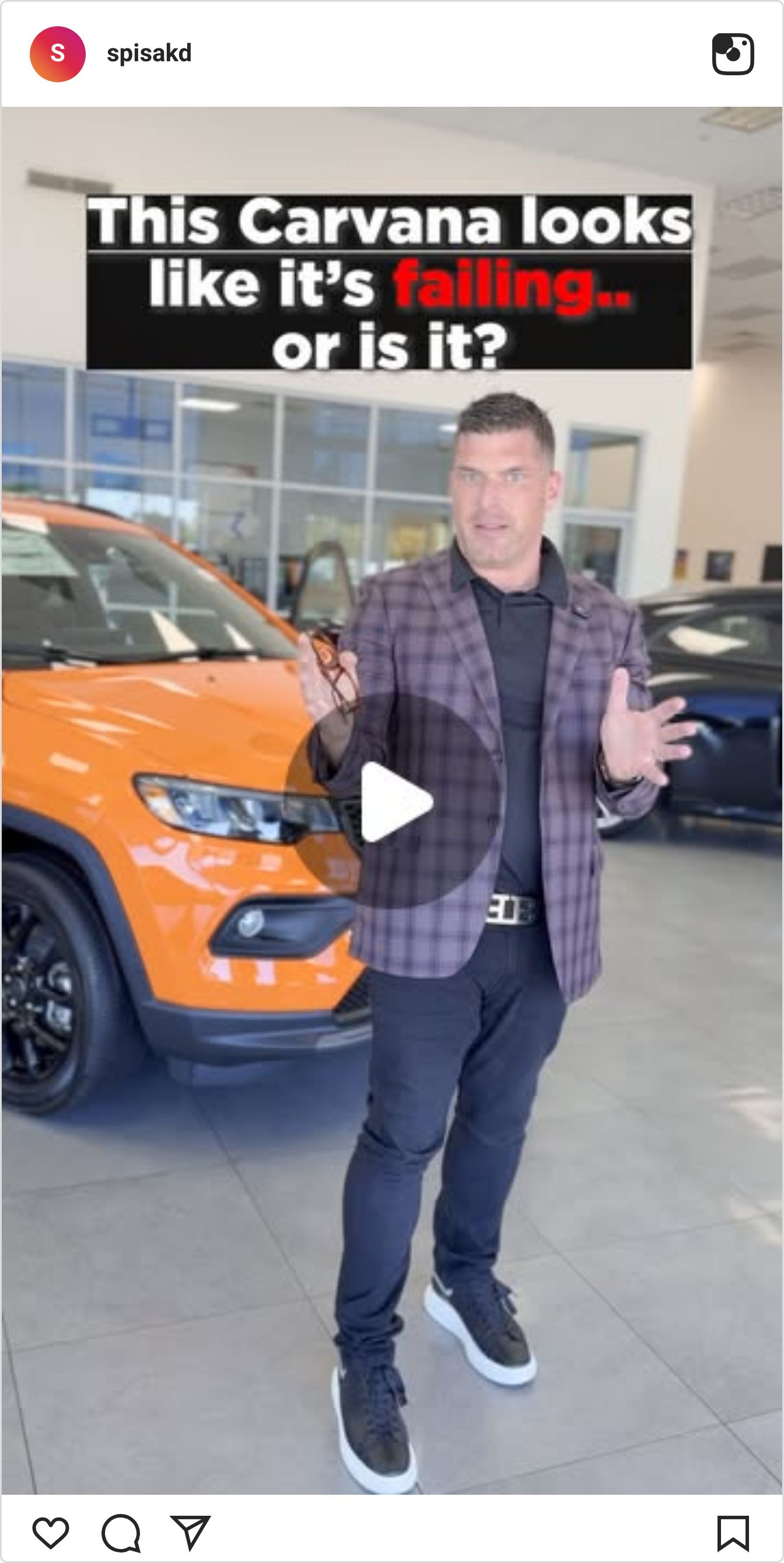
When Brian Kramer and I visited Carvana’s new CDJR store, the empty showroom wasn’t a warning sign. The store moves more than 100 cars a month with almost no walk-in traffic. The transaction happens digitally—raising a question every dealer should ask: how much of your physical footprint serves the customer, and how much serves an outdated process?
Customers don’t want marble floors and a three-hour transaction. They want speed, simplicity, and transparency. Watch the short, then ask yourself what you would change if you were building your dealership today.


DAVID’S TAKE
This is Dealership A from my article, operating in real life. Look at what actually happened: AI surfaced a fact nobody had, the fact changed the process, and the process change created the need for more people, not fewer. They hired advisors. Most stores would have taken the same 67% number and used it to justify a headcount cut, then wondered why service retention kept sliding. The other thing worth stealing here is the defection analysis. Knowing exactly who left you and where they went is the most actionable data in your building, and almost nobody looks at it. – DS
DAVID’S TAKE
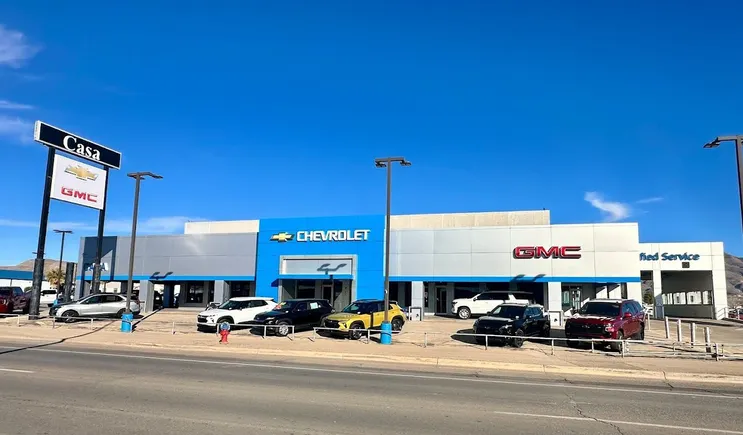
Two things here, and the second one matters more. First, this is consolidation used as strategy rather than as a collection of rooftops. Density in one market means shared talent, shared marketing, shared inventory and real pricing power. Second, count what they bought: 500 bays and 280 technicians. In an environment where the average vehicle is 12.8 years old and new-car gross keeps compressing, that is not a support department attached to a car business. That is the annuity. When the best-capitalized operators in the country write a check this size, look closely at what they think they are buying. – DS
DAVID’S TAKE
Put those two lines next to each other, because together they tell the whole story of this decade. Total store profit is down 43% from the 2022 peak. Fixed ops gross is up about 52% from 2020. The department most dealers still park at the back of the building is the one carrying the business. If your service drive looks and feels the same as it did in 2019, you are running a 2019 business inside a 2026 P&L. Ask yourself a simple question this week: which department got your last capital investment, and which one earns your most reliable gross? – DS

DAVID’S TAKE
This is what I mean when I say your market is no longer ten miles wide. A store 2,000 miles away outsold most of the franchise from a market it has no physical presence in, using ad dollars and merchandising. You cannot lobby your way out of this and you cannot out-local it. But read that last quote again, because it is the opening. Every one of those remote sales is a customer in your backyard with a vehicle nobody local owns the relationship on. Build the process to find them, capture the service, earn the trust and take the next sale. Somebody is going to. It should be the dealer who is actually there. – DS
DAVID’S TAKE
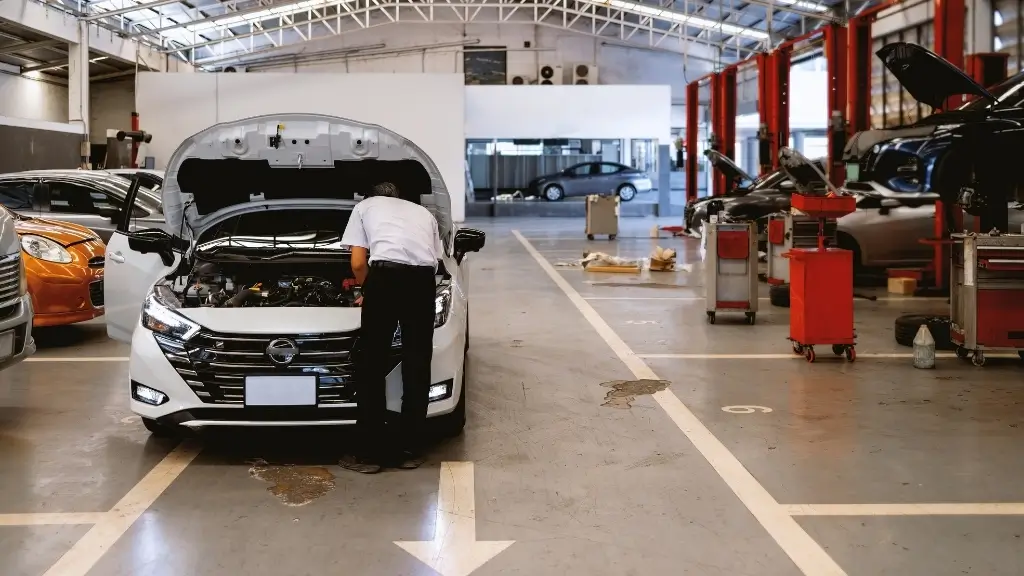
We keep calling fixed ops the economic engine and then making it the hardest part of the business to reach. Twice the wait and twice the lead time against the chain down the street is not a staffing excuse, it is a design choice nobody made on purpose. And note where some of the failures came from: AI transfers that dropped the customer. That is the bolt-on problem in one line. Automation layered onto a broken handoff just loses the customer faster and with better reporting. Call your own store this week and time it yourself. Then go listen to ten calls that never became appointments. – DS

DAVID’S TAKE
Here is the part dealers keep missing. The customer priced out of a new car does not automatically become a used-car customer at your store, because the affordable used car barely exists anymore. Under-$20K units went from more than half the used market to under a third. That inventory does not show up at the auction waiting for you. It comes from your own service drive, your lease portfolio, your equity customers and your street purchases. Sourcing is now the single most valuable skill in the used-car department, and it is the one most stores have never formally trained. – DS
DAVID’S TAKE
A 22-point swing in five years is not a trend, it is a transfer of the business. And it happened in the same years we were all calling fixed ops our most defensible asset. The uncomfortable part is that we lost it on convenience and price transparency, which are the two things entirely within our control. The chains did not out-engineer us. They published a price, answered the phone and got the car in tomorrow. If you want that share back, start by publishing maintenance pricing on your own website this month and holding your team to a same-week appointment standard. – DS
About Disruptive Intelligence
Disruptive Intelligence is a biweekly newsletter delivering dealer-tested, data-backed strategies you can implement at your store right away. Take action on what's here and you're guaranteed to see your dealership's results improve in 2026 (and beyond).
© 2026 Disruptive Intelligence