
Presented by:

Hello Everyone!
The one thing that separates a good year from a dynasty: your standard. Not your best people, not one hot market, not a clever strategy, the standard you refuse to lower when lowering it would be easier. Here's how the enduring institutions build it, protect it, and outlast everyone who won’t.
This issue of Disruptive Intelligence also includes:
➜ Disruptive Intelligence Blueprint - 7 moves to build an elite standard.
➜ Industry Spotlight - Why high-performing teams are built by design, not chance.
➜ Featured Podcast - Why simulations reveal what interviews miss.
➜ Let’s Get Social - Why elite performers choose growth over comfort.
➜ Hits & Misses - What’s working, what isn’t, and why it matters.
| Sorry to Disrupt You |
The Elite Standard
How to Build, Protect, and Sustain Organizational Dominance for Decades
I’ve seen this happen more times than I care to count: a company everyone once admired slowly becomes average. Execution becomes inconsistent. Top performers leave. Margins compress. From the outside looking in, people assume something dramatic must have happened. A disruptive competitor entered the market. The economy crashed. An irreplaceable leader left. The truth is companies don’t fail due to one catastrophic event. They fail because of a thousand small compromises.

One difficult conversation that never happened.
One under-performer who stayed too long.
One standard that someone failed to enforce.
One exception that quietly became the new expectation.
Over time, those compromises stop feeling like exceptions.
They become the culture.
The companies that dominate for decades, on the other hand, do so because they set extraordinary standards and refuse to lower them.
Success is the most dangerous threat to excellence.
When a business reaches a new milestone—a record month, a record year, a number-one ranking—most leaders instinctively relax. They celebrate. They take their foot off the gas. They begin defending what they've built instead of asking how to improve it. That's the moment decline begins. I've often compared it to climbing Mount Everest. Getting to the summit is an extraordinary achievement. Living there is something entirely different.
Reaching the top demands intensity.
Staying there requires discipline.
The organizations that sustain excellence for decades understand this distinction. They don't confuse achievement with permanence. They know today's success creates tomorrow's complacency if leadership allows it. Average organizations wait for declining CSI, shrinking margins, or increased turnover before they act. Elite organizations raise the standard before the market forces them to.
From Situational Greatness to Institutional Excellence
One of the biggest mistakes I see organizations make is confusing great people with a great culture. They're not the same thing. Walk into the average dealership and your experience depends on who happens to greet you. One salesperson is exceptional. Another is average. One service advisor communicates constantly. Another disappears for days. One manager builds trust. Another destroys it. The customer experience becomes a coin toss. That's situational excellence.

Elite organizations don't rely on heroes. Instead, they build systems that make excellence repeatable. Starbucks illustrates this better than almost any company I know. There are more than 80,000 possible drink combinations on the menu. Yet a new barista, after a remarkably short period of training, can consistently produce virtually any of them. Whether you're in Manhattan, Des Moines, Tokyo, Honolulu, or Fairbanks, Alaska, customers expect (and receive) essentially the same experience. That consistency isn't the result of hiring thousands of coffee geniuses. It's the result of elite systems. Clear expectations. Disciplined training. Repeatable processes. The genius isn't in the individual. The genius is in the standard. The same principle explains why organizations like FedEx continue delivering with remarkable consistency or why Disney creates magical experiences with frontline employees earning ordinary wages.
Sewell Automotive Companies is a perfect example. They have operated for more than a century around one unmistakable idea: “We are in the customer service business. We just happen to sell cars.”
That belief isn’t treated as advertising language. It governs how people are selected, trained, developed, and expected to serve. The standard has outlived individual leaders, changing franchises, economic cycles, technological disruptions, and generations of customers.
That is the difference between a slogan and an operating system.
A slogan depends on people remembering the words. An operating system shapes what people do, even when the person who created it is no longer in the room.
The Three Forces Behind Every Elite Organization
Every organization capable of sustaining excellence over decades shares three characteristics. First, they define the standard. Not with slogans. Not with inspirational posters. With observable, measurable behaviors. Everyone knows exactly what excellence looks like.
Second, they enforce the standard. Consistently. Especially when it's inconvenient. A defined standard without accountability isn't a standard. It's theater. Nothing destroys credibility faster than selective enforcement. The moment one employee receives a pass because they're productive, everyone else learns what leadership truly values.
Third, they inspect the standard. There's an old management principle that says what gets measured gets managed. I would argue something even simpler. What gets inspected improves. What doesn't get inspected quietly becomes the culture. Elite organizations don't assume excellence is happening. They observe it. Coach it. Measure it. Reinforce it. Every single day.
Standards don't drift because people forget them.
They drift because leaders stop enforcing them, inspecting them, and living them.
Protect Your Standard at All Costs
It’s easy to enforce standards when the decision is obvious. The real test comes when it’s inconvenient. What happens when your highest producer is also arrogant, manipulative, or destructive to the people around them? What do you do when a profitable client repeatedly disrespects your team? How would you address an under-performer who is popular, loyal, or related to an owner/executive? That’s when leaders reveal to the rest of the team whether the standard is real.

I have never believed performance alone should earn someone a place inside an elite organization. Talent matters. Results matter. Neither excuses toxicity, entitlement, dishonesty, or behavior that weakens the culture, though. The same is true of underperformance. If someone consistently fails to perform as advertised and leadership refuses to address it, the consequences extend far beyond that individual. How? Because your A players are watching. They see who carries the workload. They see who receives exceptions. They see whether leadership is willing to have the difficult conversation. Keeping a chronic underperformer to avoid conflict may feel compassionate, but it sends a very different message to the people meeting the standard: Excellence is optional.
Elite people do not want to work in organizations where accountability depends on personality, politics, or production. They want to know the standard applies equally to everyone. That is why elite leaders are willing to sacrifice short-term revenue to protect long-term culture. They understand that one tolerated behavior can undo years of cultural investment.
The Experience Starts Long Before the Customer Arrives
Many organizations talk endlessly about customer experience. Elite organizations understand something deeper. Customer experience is the downstream result of associate experience. Organizations like Sewell didn't simply create extraordinary customer loyalty. They built extraordinary associate cultures. Hendrick Motorsports has invested millions supporting employees during some of the most difficult moments of their lives. Carter Myers has built community service into its identity by donating and reconditioning vehicles for single mothers who need reliable transportation to support their families.
When associates believe they're part of something meaningful, they naturally extend that same level of care to customers. The elite standard doesn't begin in the showroom. It begins inside the organization. When the entire business is operating from the same set of expectations… that’s when culture becomes institutional rather than individual.
Living on Everest
Anyone can climb the mountain once. The challenge isn't reaching the summit. The challenge is building an organization capable of living there. That's the difference between a company that enjoys a great year and one that dominates for decades. Elite organizations don't wait for crises to raise the bar. They don't depend on extraordinary people to rescue ordinary systems. They don't allow culture to become situational.
|
✓ They define the standard.
✓ They enforce the standard. ✓ They inspect the standard. ✓ Relentlessly. |
Organizations don't lose because something catastrophic happened.
They lose because they slowly become willing to accept what elite organizations never would.
| Disruptive Intelligence Blueprint |
Elite isn't someone you hire. It's a system you refuse to lower. 7 moves to build the standard:
Write down what “elite” looks like for every role and every customer touch.
If it only lives in your best people's heads, you don't own it. You're renting it, and they can quit.
The day your results depend on who happened to show up, you've already lost control of them.
Set the standard, hold the line, and alignment follows.
A standard nobody is held to isn't a standard. It's a poster in the break room.
Raise the floor and you raise the whole building — that's where the gross is hiding, not in one more superstar hire.
Build the callback, the walkaround, the follow-up into the process so every customer gets your best on your worst day.
Consistency IS the differentiator — nobody trusts a store that's great on Tuesday and a mess on Thursday.
You control whether your standards were built before the ground moved.
The dealers who dominate the next downturn are building the boring, bulletproof processes right now, while it's calm and nobody's making them.
Put a number on it, look at it every day, coach to it relentlessly.
What gets inspected gets repeated, and what gets repeated becomes your culture — whether you chose it or not.
Your best people will leave, get poached, or have an off year. That's math. The only thing that stays is the standard you built into the building. — DS
| Industry Spotlight |
"Culture Doesn't Drive Behavior. Structure Does — and Culture Is Just the Residue."
Daniel Hartweg — former Site Director and Head of Operational Excellence, and a Master Black Belt in performance transformation and Lean — argues that most "people problems" on a team are actually design flaws. High-performing teams don't depend on heroic individuals; they run on an operating system that makes success inevitable. His rules: process before people (when something breaks, map the dependency and fix the handoff, not the human); alignment is a product of clarity, not silence; measure outcomes, not activity. And the discipline that separates the best leaders he's worked with — they review their team's critical handoffs every week, asking not "how is everyone doing?" but "where is the system failing the people?"

This is the operational backbone of everything I argued up top, and Hartweg lands it cleaner than most consultants ever will: "Structure drives behavior, and culture is just the residue." Read that twice. Every dealer who ever blamed a rough month on "attitude" or "effort" was staring at a design flaw and calling it a people problem. And his weekly habit is the tell — the best leaders don't ask how everyone's doing, they ask where the system is failing the people. That's the entire difference between a store that runs on heroes and one built to win without them. That's not a soft skill. It's architecture. - DS
| Featured Podcast |
Your best salesperson and your worst salesperson gave the exact same answer in their interview. So why did only one of them survive the first bad month?
I sat down with Napo Rumteen, the guy who scaled Tekion from zero to $100M+ ARR and built Interactive EQ, a platform that puts candidates and employees inside immersive, high-pressure simulations instead of asking them to describe themselves on paper.
Continue the conversation by watching or listening to the episode:

Available on: Youtube | Spotify | Apple Podcasts
| Let's Get Social |
| Hits & Misses |


▲ HIT - Good for Dealers


This is the cleanest proof in the industry that a standard beats a market. Everybody else blamed 2009 — Benstock used it. While competitors froze, he doubled down on process: conquest service, relentless retention, follow-up on a schedule, and walked out of the worst downturn in a generation as the #1 Honda dealer on the planet. He didn't have better cars or a better economy. He had a better system, run the same way every single day. So ask yourself: is your operation built to GAIN share when the market turns, or just to survive it? — DS
▲ HIT - Good for Dealers
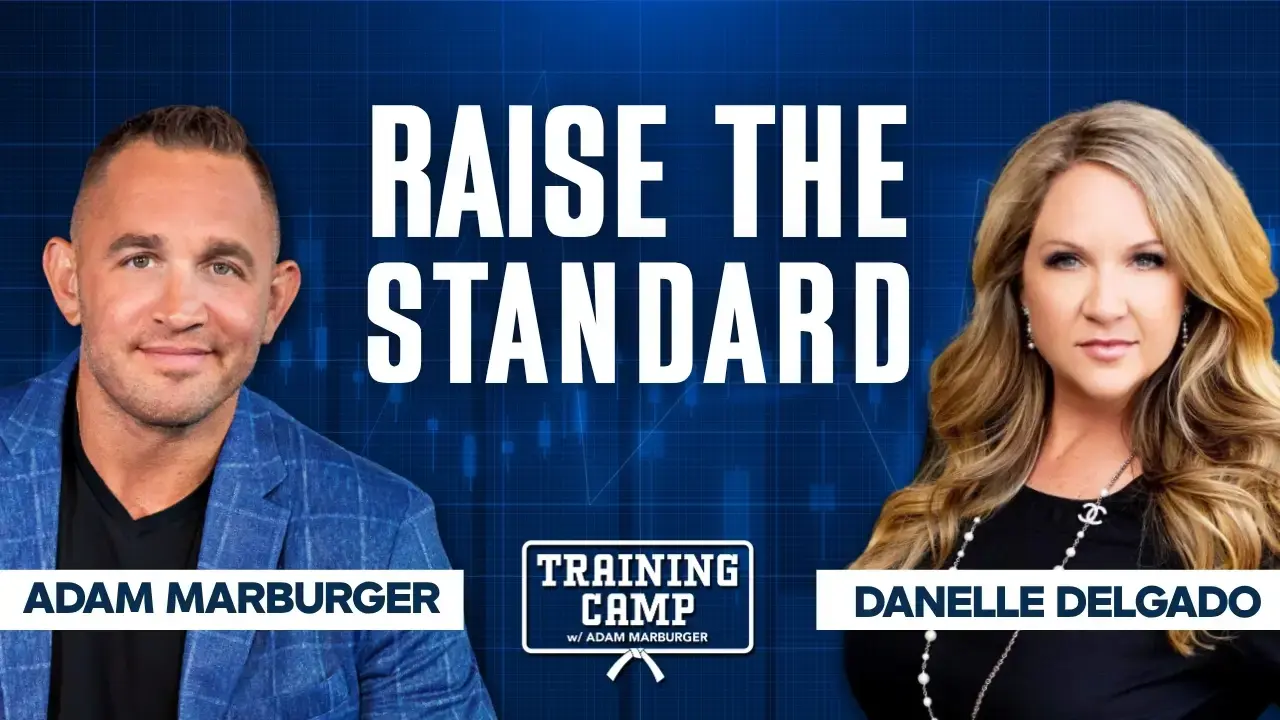
Read this one right next to my feature, because Delgado is measuring the exact disease I'm describing. Her point lands hard: dealerships don't lose to a talent shortage — they lose because they tolerate average from capable people instead of raising the bar. And notice where she says the money is hiding: not in your top producers, but in the muddy middle you've made peace with. That's not a hiring problem you can spend your way out of. It's a standard you've stopped enforcing. Raise the floor and the whole building comes up with it. — DS
▲ HIT - Good for Dealers


I put Sewell in my feature for a reason — he's the proof. One man wrote down a standard almost 40 years ago, built it into how his people are selected, trained, and expected to serve, and that standard is STILL running the business generations later. That's the whole game. Sewell didn't chase the transaction; he engineered a relationship that outlives the salesperson, the manager, even the founder. So ask yourself the uncomfortable question: if you walked out tomorrow, would your customer experience survive you? His does. — DS
▲ HIT - Good for Dealers


Fifty years. That's the number that matters here. Anybody can string together a great quarter — Hendrick built an institution that has held its standard across five decades, thousands of employees, and every market cycle in between. And look at their actual core values: “accountability at all levels” isn't a poster on the wall, it's why the thing still runs when Mr. H isn't in the room. That's the difference between a founder's talent and a founder's standard. One retires. The other gets inducted into the Hall of Fame. — DS

▼ Miss - Hard on Dealers

This is my “success is the greatest threat” section wearing a business suit. Boeing didn't fall because the work got hard — it fell because success made them comfortable, and comfort let them trade engineering discipline for the share price, one “reasonable” exception at a time. Nobody voted to become unsafe. They just stopped enforcing the standard that made them Boeing, and by the time the market noticed, people were dead. Read it as the warning it is: the erosion never announces itself. It shows up as a quarter that looked just fine. — DS
▼ Miss - Hard on Dealers


Here's the uncomfortable part: this isn't about bad cars. It's about a service standard that slipped while everybody else's rose. When your whole portfolio clusters at the bottom of a satisfaction ranking, that's not a coincidence or a rough patch — it's culture, measured. And it's completely fixable, which is exactly why it stings. Every one of those service visits was a chance to keep a customer for life, and instead it became a reason to shop somebody else on the drive home. The standard shows up in the survey whether you enforced it or not. — DS
▼ Miss - Hard on Dealers

Every operator obsesses over hiring and ignores the thing that actually kills the standard: churn. You can write the best process in the world, but if the people running it turn over every eighteen months, you're re-teaching the standard forever and never actually banking it. Tenure is where institutional excellence lives — the advisor who knows the customer's history, the manager who holds the line without being told. Lose them and you don't just pay to rehire. You reset the standard to zero and pray the next person is a unicorn. — DS
About Disruptive Intelligence
Disruptive Intelligence is a biweekly newsletter delivering dealer-tested, data-backed strategies you can implement at your store right away. Take action on what's here and you're guaranteed to see your dealership's results improve in 2026 (and beyond).
© 2026 Disruptive Intelligence