
Presented by:

Hello Everyone!
This issue is about the most expensive mistake in retail automotive: hiring the résumé instead of the person. Experience is not the same thing as potential — and the dealers who learn to tell the difference will build teams their competitors can't touch. Here's how to find elite people where nobody else is looking, and how to keep them once you do.
This issue of Disruptive Intelligence also includes:
➜ The Playbook - 7 moves to build an elite team.
➜ Industry Spotlight - Hiring for experience feels responsible. Hiring for attitude requires judgement.
➜ Featured Podcast - Great Teams Aren’t Found. They’re Built.
➜ Let’s Get Social - When customers want to become your employees.
➜ Hits & Misses - What’s working, what isn’t, and why it matters.
| Sorry to Disrupt You |
The Best Hire I Ever Made
Over the course of my career, I’ve interviewed thousands of people. Some had decades of automotive experience. Some had impressive résumés. Some had sold many millions of dollars’ worth of vehicles.
One of the best people I ever hired had none of those things. In fact, when I met him, he was selling batteries.
Years ago, I walked into a Circuit City looking for AA batteries for one of my kids’ toys. I expected to be in and out in five minutes. A young employee named Ben approached me and asked what type of batteries I needed.
“AA.”
“Sounds like you’re getting batteries for a remote-control toy.”
He was right.
“How often are you replacing them?”
Every couple of weeks.
Then Ben said something I wasn’t expecting: “You probably shouldn’t buy those batteries.”
Think about that. A salesperson was telling a customer not to buy the product he came in to purchase.
Instead, Ben explained rechargeable batteries and suggested buying two sets. One could charge while my kids drained the other. I’d spend a little more that day but probably never need to buy disposable batteries for that toy again.

His presentation on AA batteries was more thoughtful, consultative, and customer-focused than many vehicle presentations I had witnessed from professionals selling $50,000 automobiles.
I wasn’t just sold on the batteries. I was sold on Ben.
But I wanted to know whether what I had witnessed was genuine or whether I had simply caught him on a good day. So, a few days later, I went back. This time, I needed a printer cartridge.
What could be simpler—or less worthy of a presentation—than that?
Ben did it again. He asked questions. He listened. He educated me. He explained the differences. He made a complicated decision simple.
Different product. Same Ben.
And that is much harder to teach.
I asked him if he had ever considered a career in automotive retail. He laughed. He knew absolutely nothing about cars.
I didn’t care. I wasn’t interested in hiring Ben for what he knew. I wanted to hire him for who he was—and who I believed he could become.
Soon after, I did.
In his first year, Ben became Salesperson of the Year. Then he did it again. He became a Finance Manager, then a Sales Manager, then a General Manager. Eventually, the kid selling batteries at Circuit City became Chief Operating Officer of one of the top dealership groups in America.

The cars changed. The customers changed. His responsibilities changed.
Ben never did.
He listened. He cared. He learned. He worked. He earned people’s trust.
And therein lies one of the greatest lessons I have learned about hiring.
We Seek to Fill Positions. We Hire Resumes.
Then we wonder why we can’t find great people.
|
Too many dealerships begin an interview with some variation of: “How many years have you been selling cars?” “What’s the most you’ve ever sold in a month?” “Have you worked in fixed operations?” “Do you know how to use our DMS?”
|
There is nothing wrong with experience. But we have confused experience with potential.
They are not the same thing.
Ten years of experience might mean ten years of growth, learning, discipline, and increasingly exceptional performance. It can also mean one mediocre year repeated ten times.
Yet our industry routinely rejects someone with extraordinary raw potential because they have never sold a car, while enthusiastically hiring someone because another dealership already taught them how. Six months later, we wonder why nothing changed.
We filled our position. We hired their history. And got their history.

Meanwhile, extraordinary people are all around us—in restaurants, hotels, electronics stores, aviation, hospitality, the military, and dozens of other industries. They simply don’t have “automotive experience” on their résumé.
Neither did Ben.
Stop Hiring for What You Can Teach
Product knowledge can be taught. A CRM can be taught. Your sales process can be taught. How to complete a repair order or structure a deal can be taught.
|
Experience comes with time.
But curiosity? Caring? Humility? Work ethic? Integrity? The desire to become exceptional?
|
Those are considerably harder to manufacture and nearly impossible to teach.
When I evaluate someone, I’m far less interested in whether they already know our business. I want to know: Do they care about people? Are they obsessed with getting better?
Are they curious? Do they ask thoughtful questions? Can they communicate and listen? Are they coachable? Do they take ownership when they are wrong?
Because if I can find those things, I can teach someone the car business.
Stop Conducting Job Interviews. Start Discovering People.

Most interview questions produce rehearsed answers. “Tell me about yourself.” “What are your strengths?” “Where do you see yourself in five years?”
If you want to discover potential, ask questions that make people think.
Here are ten of my favorites:
|
I’m not looking for perfect answers. I’m looking for evidence.
Evidence of character. Self-awareness. Curiosity. Humility. Resilience. Ambition.
What someone reveres tells you who they want to become. How someone talks about failure tells you whether they take responsibility. How they describe a former leader tells you what leadership means to them.
An interview shouldn’t simply determine whether someone can do the job today. It should help you see who they might become tomorrow.
But There Is One More Problem
Finding extraordinary people is only half the equation. You have to become an organization they want to join.
We all played Follow the Leader as kids. The principle hasn’t changed.
A-players will not consistently work for C-level leadership.

If exceptional candidates aren’t attracted to your dealership—or exceptional employees don’t stay—the labor market cannot always be the explanation.
Sometimes the mirror is.
Dealers are no longer competing only against the dealership across town for talent. You’re competing against hospitality, technology, aviation, government, the military, national retailers, and every organization capable of giving talented people opportunity, development, purpose, and a future.
I walked into Circuit City that day looking for batteries. I walked out having met a future COO.
The difference was that I wasn’t looking at Ben’s résumé.
I was looking at Ben.
I wasn’t looking for automotive experience. I was looking for the qualities experience can never guarantee: character, curiosity, empathy, work ethic, humility, the ability to listen, the desire to learn, and the instinct to put another person’s interests ahead of his own.
Maybe the next great leader in your dealership has never sold a car. Maybe they don’t know the difference between a sedan and an SUV.
Maybe they’re serving you dinner tonight, helping you at a hotel tomorrow, working at an Apple Store this weekend, or doing something completely unrelated to automotive while waiting for someone to recognize what they could become.
The question is whether you’ll recognize them when they’re standing right in front of you.
| The Playbook |
7 Moves to Build an Elite Team
Stop filling positions. Start finding people.
|
||
|
||
|
||
|
||
|
||
|
||
|
The greatest talent in your market usually isn't the person with the best résumé. It's the one whose potential everyone else was too lazy to see. — DS
| Industry Spotlight |
Hiring for experience feels responsible. Hiring for attitude requires judgment.
Janet Kim — TEDx speaker and 20-year enterprise-transformation leader at Stanford, argues that leaders default to résumés because credentials feel safer than instincts, even though her most impactful hires (career returners, career switchers, people without polished credentials) would never have survived a traditional screening loop. What they had was curiosity, ownership, and an appetite for responsibility, the part you can't train. Her sharpest point: hiring for attitude “doesn't mean lowering the bar, it means moving it earlier”, giving people real ownership, clear expectations, and real consequences before they've proven themselves, so they accelerate instead of slowly “growing into” the role.

Kim just closed the loop on everything I argued up top. I told you to hire the person, not the résumé. She tells you what to do the day after you do it: bet on them out loud. Her line should be on every GM's wall: “skill is learnable, but momentum isn't.” That's the piece most dealers miss. They'll take a flyer on raw talent, then bury it in a six-month “prove it to me” hazing ritual and wonder why the spark died. Kim's challenge is the one that stings: if you say you hire for potential, do you invest in it early, or wait until it stops being potential? Your team already knows the answer.
— DS
| Featured Podcast |

Great Teams Aren’t Found. They’re Built.
Michael Porro has spent decades in automotive retail, and one lesson has remained constant: the best people don’t always walk through the door fully formed. Great leaders recognize potential, hire for the qualities they can’t teach, and then give people the training, expectations, and opportunity to grow. Michael joins David to talk about building winning teams, maintaining high standards, and why developing people still matters more than whatever new technology comes next.
Available on: Youtube | Spotify | Apple Podcasts
| Let's Get Social |
The ultimate proof that your business model works? Your customers want to work for you.
Erikka Tiffani Wells completely flipped the script on the traditional, high-friction car buying experience. Her team at Walser has created a process so transparent and seamless that customers are literally asking for job applications after they buy a car. If you can get a customer in and out in 60 minutes without the typical "grimy" dealership tactics, you don't just sell a car, you build a brand advocate.

| Hits & Misses |


▲ HIT - Good for Dealers
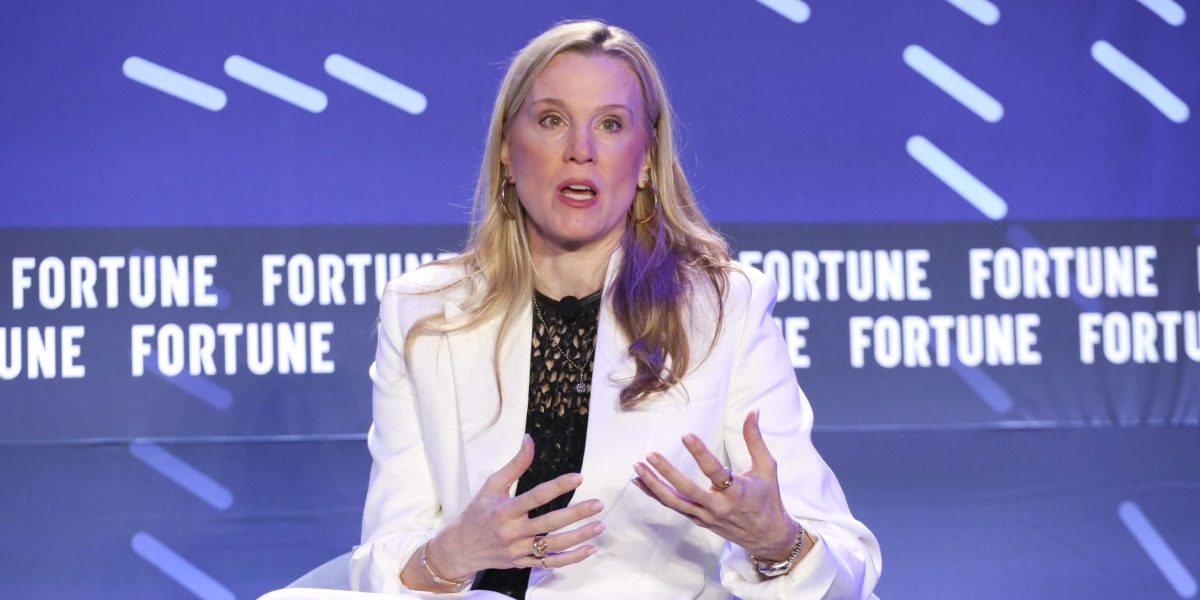

When a company that produces Fortune 500 CEOs tells you its “secret sauce” is hustle and curiosity, not pedigree, that should settle the argument in every dealership. Schmitt is describing the exact hire I built this issue around: the one you can't manufacture with a credential. And notice the AI angle, as the machines eat the technical tasks, the human stuff (drive, judgment, the appetite to figure it out) becomes the whole ballgame. If PepsiCo hires for what can't be taught, why is your store still screening first for “years in the car business”? — DS
▲ HIT - Good for Dealers

This one's a gift, because it isn't me saying it, it's the car business's own trade press. Experience feels safe until you realize what you're often buying: someone else's bad habits and a mindset that fights your process. The inexperienced hire with the right character shows up hungry, coachable, and free of the baggage. Every dealer who's ever spent six months un-teaching a veteran knows exactly what this means. Stop paying a premium for a résumé that just guarantees you'll spend a season undoing what the last store taught them. — DS
▲ HIT - Good for Dealers


Read that line twice, because it's the whole issue in one sentence: if you only hire people who already have dealership experience, you're fighting every other store for the same shrinking pool, and losing. The talent you need is sitting in other industries right now, with the character you can't teach and none of the bad habits you'd have to un-teach. Widen the net or keep drowning in the same pond as your competitor. The shortage isn't a people problem. It's a “where you're looking” problem.
— DS

▼ Miss - Hard on Dealers


Sit with that number: nearly two-thirds of the talent you need won't even apply, before you've said a word. That's not a labor shortage, it's a reputation problem, and it's the mirror this whole issue is about. The industry spent decades earning that “no thanks”, the hours, the pay-plan roulette, the culture. The good news? It's fixable, and the dealers who fix it unlock a talent pool their competitors literally can't reach. The question isn't whether great people exist. It's why they've decided your store isn't worth the risk. — DS
▼ Miss - Hard on Dealers


Every leader chasing an AI headcount cut should tape this to the monitor. Your entry-level people aren't a cost to delete — they're your future managers, your future GMs, the bench you'll be desperate for in three years. Cut the bottom of the ladder to look efficient this quarter and you'll pay a premium to poach experience later, because you stopped growing your own. The dealers who win with AI won't be the ones who fired the juniors. They'll be the ones who used the tools to make junior people productive faster. Don't eat your seed corn. — DS
▼ Miss - Hard on Dealers
This is the exact trap I'm warning you away from, dressed up as “being responsible.” When your managers are drowning, “just hire someone experienced” feels like relief. It's actually how you strangle your own future. Every store that stops betting on potential because “we don't have time to train” is quietly choosing to fight forever over the same tiny pool of veterans, and to have no bench when they leave. The fix isn't hiring more experience. It's protecting your managers' time to develop people. Skip that and you'll always rent talent, never build it.
— DS
About Disruptive Intelligence
Disruptive Intelligence is a biweekly newsletter delivering dealer-tested, data-backed strategies you can implement at your store right away. Take action on what's here and you're guaranteed to see your dealership's results improve in 2026 (and beyond).
© 2026 Disruptive Intelligence