
Seven 5-Minute Fixes to Transform Your Dealership
The money you are looking for may already be leaking out of your store.
Presented by:  |
Hello Everyone!
Before you spend another dollar chasing the next sale, take a look at what your store is already giving away. Unused software. Excess inventory. Service work nobody followed up on. In this issue, I walk through seven five-minute fixes that can help you start finding that money, with a playbook to put someone in charge of recovering it. Kevin Tynan brings the outside perspective, and this week’s industry examples show where operators are gaining ground and where money is still slipping away. Let’s get to work.
In this issue:
➜ Sorry to Disrupt You Seven 5-Minute Fixes to Transform Your Dealership (5 min) | ➜ The Playbook 8-Step Net-Profit Recovery Playbook (3 min) |
➜ Industry Spotlight Travis Hawk: Catch Profit Leaks Before Month-End (1 min) | ➜ Featured Podcast Kevin Tynan: Why Dealerships Are Making Less Money (1 min) |
➜ Let's Get Social Make Every Process Re-Earn Its Place (45 sec) | ➜ Hits & Misses 5 Hits, 5 Misses: Protecting Your Net Profit (10 min) |
| Sorry to Disrupt You |
Seven 5-Minute Fixes to Transform Your Dealership
The money you are looking for may already be leaking out of your store.
By David Spisak

Russell Conwell’s “Acres of Diamonds” tells the story of Ali Hafed, a prosperous Persian farmer who sold his land and left home in search of diamonds. He never found them. The person who bought his farm later discovered that the land contained an extraordinary diamond mine.
The opportunity Ali Hafed spent his life searching for had been beneath his feet all along.

I think about that story often because I talk with dealers every day who are searching for the next enormous opportunity. A new revenue source. Another acquisition. More units. A new technology. Another lead provider.
They become so focused on what might be out there that they fail to inspect what is already inside their dealership.
What is even more frustrating is that dealers are often far more excited about making another dollar than keeping one they already earned. But there are only two ways to have more money at the end of the month: make more or spend less.

These seven fixes can each begin in approximately five minutes. None requires another rooftop, another employee, or another vehicle sold. Each can uncover an opportunity already sitting inside your store.
Audit Every Vendor and Software Subscription
Pull a current list of every vendor, subscription, license, platform, data feed, and recurring technology charge your dealership pays.
Then ask three questions:
Do we use it?
Does it produce measurable value?
Is another tool already doing the same thing?
Dealerships rarely intend to build redundant technology stacks. They accumulate them one purchasing decision at a time. A manager signs up for a tool, the manager leaves, the process changes, and the invoice keeps arriving.

Five minutes will not complete the audit. It will expose whether one is overdue.
The potential outcome is immediate: eliminate duplicate tools, unused licenses, outdated services, and contracts that no longer support the business. Every dollar removed from recurring monthly expense becomes twelve dollars of annualized savings.
Make More by Stocking Less
Dealers are conditioned to believe that more inventory creates more opportunity. Sometimes it creates more carrying cost, more advertising expense, more compensation exposure, more aging risk, and more capital trapped in vehicles the market does not need.
Start with one question:
How many vehicles do we have today that we would not intentionally acquire again?
If your own estimate is that each unnecessary vehicle costs $200 per month to carry, twenty excess vehicles represent at least $4,000 per month, or $48,000 per year, before accounting for depreciation, price reductions, or wholesale loss.

Reducing inventory can lower sales volume on paper while improving the economics of the dealership.
Put Controls Around the Supplies Nobody Notices
A dealer-group executive once told me his organization saved approximately $1.1 million in one year by changing how it distributed sandpaper.
Technicians had been grabbing extra sheets on the way into the shop “just in case.” Much of it was never used, but it still disappeared into toolboxes, work areas, or the trash. The group created a simple process: sandpaper was issued when it was required for a specific job.
Across roughly 100 stores, that small operational control produced more than $1 million in reported savings.

Your opportunity may not be sandpaper. It could be shop supplies, uniforms, toner, detail chemicals, office supplies, keys, fuel, parts freight, or disposable equipment.
Choose one high-volume supply category. Compare what was purchased with what was actually consumed.
Stop Paying for Leads You Already Abandoned
Dealers spend heavily to create opportunities, then allow many of them to become “dead leads” because the first process failed.
Pull twenty leads marked lost, closed, unresponsive, or inactive. Call them.
Do not begin with another sales pitch. Ask whether they purchased, whether they are still shopping, and what prevented them from moving forward with your dealership.
At one dealership where I recently used this exercise, four of twenty customers contacted ultimately purchased a vehicle.

The outcome is bigger than four sales. You may discover response-time failures, weak follow-up, poor messaging, inaccurate CRM status, or customers your team gave up on too quickly.
Replace “Declined Service” With “Deferred Service”
A customer who declines two rear tires today is not necessarily refusing the repair. They may be delaying it because of timing, affordability, or competing priorities.
The words matter.
“Declined” sounds final. “Deferred” creates a next step.
Pull a list of deferred recommendations from the last thirty days. Select one safety-related or high-value category, such as tires, brakes, batteries, or scheduled maintenance. Contact the customer, explain why the work matters, and propose a specific return date before the issue becomes urgent.

This is not simply a revenue-recapture exercise. It helps the customer plan, protects the vehicle, and keeps an outside repair facility from inheriting the relationship.
Schedule the Next Service Appointment Before the Customer Leaves
Dentists, salons, and barbers routinely schedule the next visit before the customer walks out. Dealerships know the vehicle, the mileage, the maintenance interval, and the likely timing of the next service need, yet many still send customers away without securing the next appointment.

Ask your service manager one question:
What percentage of today’s customers left with their next visit already scheduled?
If the answer is unknown or negligible, the opportunity is immediate.
Build the next appointment into the checkout process. Even when the exact date may later change, an existing appointment creates a relationship, a reminder, and a reason to return. No appointment gives every independent shop and competing dealer an equal chance to win the business.
Audit Payment-Processing Costs and Your Payment Policy
Credit-card processing is often treated as an unavoidable cost because the dealership has used the same processor and payment policy for years.
Pull the last three merchant statements. Calculate the effective processing rate, total annual cost, chargeback expense, and fees by transaction type. Then compare providers and review whether your payment options encourage lower-cost methods.

Cash discounts and credit-card surcharges are governed by card-network rules and state law. Any policy should be reviewed with the dealership’s processor and qualified legal counsel, disclosed clearly, and implemented correctly. Debit transactions require particular care because card-network rules generally do not permit surcharging debit cards.
The five-minute fix is not adding a fee tomorrow. it's choosing a premier credit card processor. In 5 minutes, you could give them your previous statements to determine how much additional net profit you could be experiencing next month and on an annual basis
Determining whether nobody has examined a six-figure expense because the invoice has always been paid has turned into hundreds of thousands, if not millions, of dollars in additional net profit for dealership groups around the country.
The Bottom Line
These fixes are not glamorous.
That is exactly why so many dealerships overlook them.
They do not require one more vehicle sale or repair order to produce value. They reduce waste, recover abandoned demand, improve retention, release capital, and protect net profit.
Now perform a different calculation.
Take your current net profit. Add back a realistic portion of finance chargebacks, wholesale losses, excess floorplan expense, unused software, abandoned leads, missed deferred work, preventable supply waste, and unnecessary processing costs.

How different would your year look?
The answer is not somewhere outside your dealership. It is hidden inside everyday decisions, habits, invoices, processes, and missed follow-up.

These are only seven examples.
Most dealerships are standing on acres of diamonds.

| The Playbook |
8-Step Net-Profit Recovery Playbook
Seven 5-Minute Fixes to Transform Your Dealership
01 | Set a Net-Profit Recovery Target Choose a specific 30-day savings and recovery goal. Give every department a number to find, protect, or recapture. |
02 | Audit Recurring Vendor and Software Spend List every subscription, license, feed, and platform. Cancel duplication, unused access, and services that cannot prove value. |
03 | Right-Size Inventory and Release Capital Identify every vehicle you would not intentionally acquire again. Reduce excess carrying cost, aging risk, and capital trapped in weak inventory. |
04 | Control High-Volume Supplies at the Point of Use Select one supply category. Compare purchases with actual consumption, then issue materials only when the job or employee requires them. |
05 | Reactivate the Opportunities You Already Paid For Call twenty lost, closed, inactive, or unresponsive leads. Diagnose why the original process failed and recover buyers still in market. |
06 | Convert Declined Work Into Scheduled Deferred Work Reframe “no” as “not today.” Assign ownership, explain urgency, and secure a specific follow-up date before the need becomes an emergency. |
07 | Pre-Book the Next Service Visit Make the next appointment part of checkout. Give the customer a reason, reminder, and relationship that protects future retention. |
08 | Audit Payment Costs and Institutionalize the Review Analyze merchant statements, compare processors, review compliant payment options, and add a quarterly leakage review to leadership cadence. |
OPERATING PRINCIPLE Revenue creates opportunity. Expense discipline protects the outcome. Build a management cadence that finds both. |
DAVID’S TAKE Nobody is going to hand you a margin recovery. The operators protecting net profit right now are not selling more cars than you. They simply stopped assuming that an invoice which has always been paid is an invoice that should be. Pick one of these eight this week, put a name and a date on it, and make somebody report the number out loud. – DS |
| Industry Spotlight |
Catch Profit Leaks Before Month-End
Travis Hawk, MBA, CFO at Diamond Hills Auto Group, argues that dealership profit erodes through operational issues that go unchecked during the month. Aging inventory, slow receivables, creeping overtime, and declining productivity leave warning signs long before the financial statement arrives. His recommendation: a weekly leadership review of financial exceptions and controllable operating metrics. Each issue gets an owner and a deadline, giving managers time to act while they can still affect the month’s results.

Source: LinkedIn • Travis Hawk, MBA | Read More
DAVID’S TAKE This is how the seven fixes become an operating habit. Start with one leak, assign someone to fix it, and check the result next week. A five-minute discovery creates value only when someone follows through. The opportunity is already inside the store. Leadership has to keep looking. DS |
| Featured Podcast |

Kevin Tynan: Why Dealerships Are Making Less Money
November 5, 2026 • 21 min
Kevin Tynan of The Presidio Group joins David at the fourth annual Presidio Tech Conference in Denver to examine the economics behind dealership profitability. Drawing on decades of automotive analysis, including his time at Bloomberg Intelligence, Kevin looks beyond sales headlines to the operating realities dealers face heading into 2027.
The conversation asks why an industry generating substantial revenue can still struggle to turn that activity into profit, and why higher sales volume alone may not solve the problem.
Why it belongs in this issue: The seven fixes start with the money already inside your store. Kevin’s broader industry perspective reinforces the reason to inspect costs, inventory, and daily operating decisions instead of relying on more volume to improve the bottom line.
Listen or watch the full episode on:
Apple Podcasts | Spotify | YouTube
DAVID’S TAKE I put this episode in this issue on purpose. Kevin looks at our business the way a capital allocator does, from the outside, with no attachment to how we have always done it, and he lands in the same place this article does: the problem is operational, not cyclical. You will notice he does not tell you to sell more cars. Listen to the part about an industry with enormous revenue and a problem that volume will not fix, then go read your own expense schedule with that sentence in your head. – DS |
| Let's Get Social |
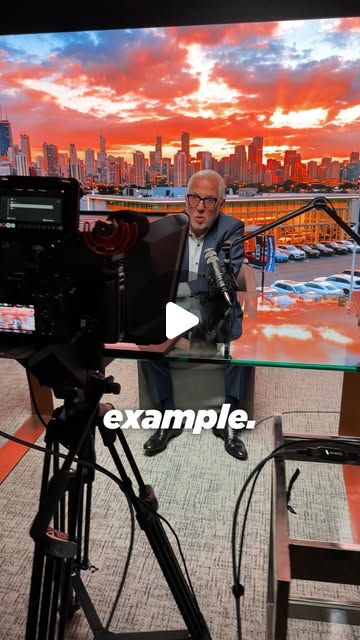
Make Every Process Re-Earn Its Place
Are you keeping a process because it works, or because it has always been there? In this reel, David compares business decisions to a new football coach setting the lineup: last season’s starting position does not guarantee a place on the field today. Every advertising expense, workflow, and strategy has to justify its role.
That is the mindset behind this issue’s seven fixes. Review the subscriptions you still pay for, the inventory you keep carrying, and the follow-up habits your team accepts. Familiarity is not evidence of value. Ask what each activity contributes to the dealership today.
What expense or process at your store needs to re-earn its place? Join the conversation in the comments.
Reel: David Spisak (@spisakd) on Instagram, October 28, 2026

| Hits & Misses |
▲ HIT - Good for Dealers
All American Auto Group Books the Next Service Visit Before the Customer Leaves
Every vehicle All American delivers, new or used, gets a first service appointment before the customer leaves the building. If service is closed at delivery, the sales team hands the customer to a service advisor the next business day by phone and email. The group has gone from one mobile service van to seventeen, and its Paramus store cut its loaner fleet from roughly 75 vehicles to about 25. Fixed Operations Director Jim Sabino runs the program.
Source: CBT News · October 27, 2026 | Read More
DAVID’S TAKE This is Fix 6 running at scale, and the number worth staring at is not the vans. It is fifty loaner units off the fleet. That is capital, floorplan, insurance, depreciation and reconditioning that came back to the store because service got organized, not because anybody sold another car. Most dealers would have bought seventeen vans and kept all 75 loaners. Notice also what happens when the store is closed: the appointment does not get skipped, it gets called the next morning. That is a process with an owner. Ask your service manager what percentage of yesterday's deliveries left with an appointment, and do not accept an estimate. – DS |
▲ HIT - Good for Dealers
Asbury Finishes Its Tekion Migration and SG&A Falls Faster at the Mature Stores
Asbury Automotive Group connected its last 47 stores to Tekion in the third quarter, putting all 158 active stores on a single platform and completing the move off CDK. CEO Dan Clara reported that at stores past the roughly six-month break-in period, fixed operations gross profit runs above average and SG&A as a percentage of gross profit has fallen by more than average. The quarter carried $6 million in implementation expense plus about $1 million for running duplicate systems during the overlap, and Clara expects the full benefit around the second quarter of 2027.
Source: WardsAuto · November 2, 2026 | Read More
DAVID’S TAKE This is Fix 1 with the price tag printed next to the result, which is why I would rather you read this than another vendor case study. Consolidation did lower SG&A as a percent of gross. It also cost seven million dollars in one quarter and the full payoff is still two quarters out. Both things are true. The lesson is not that you should change your DMS. It is that the money in your technology stack is in the overlap, not in the next purchase, and that getting it out is a multi-year operating decision rather than a signature. Put every vendor and monthly spend on one page and make each department head defend the duplicates. – DS |
▲ HIT - Good for Dealers
Data-Driven Dealers Hit Their Profitability Goals at Nearly Twice the Rate
Cox Automotive's 2026 Dealer Success Study found that 36% of data-driven dealerships reported meeting their profitability goals, against 19% of all other dealerships. Only 22% of franchised dealers strongly agreed that their decisions are primarily data-driven. The widest gap in the study was in buying behavior: 42% of data-driven dealers weigh whether a tool actually improves data quality before they sign, against 22% of everyone else. 55% say a tool is used to its full potential, against 39%. The study reports association, not causation, and no sample size is published.
Source: Cox Automotive · November 5, 2026 | Read More
DAVID’S TAKE Forget the 36% for a second and look at the 42% against 22%. More than three quarters of dealers are signing software contracts without asking whether the thing improves their data. That is how a stack becomes a stack. It is also why the vendor audit in Fix 1 finds money every single time somebody actually runs it. The other number that should bother you is 55% against 39% on full utilization, because both of those are terrible. You are already paying for the capability. Before you buy the next platform, make somebody prove the last one is being used. – DS |
▲ HIT - Good for Dealers
Visa and Mastercard Go Before the Judge on a $38 Billion Swipe Fee Settlement
Visa and Mastercard asked a federal judge on November 16 to grant final approval to a $38 billion settlement of merchant claims over credit card processing fees. The terms cut swipe fees by 0.1 percentage point for five years, cap fees on standard consumer cards at 1.25% for eight years, and end the Honor All Cards rule, which has required merchants to take every Visa and Mastercard product or none. Merchants would instead be able to accept by category: commercial, premium consumer including rewards cards, and standard consumer. Judge Brian Cogan granted preliminary approval in June and did not rule at the November hearing. The settlement is not final.
Source: Reuters, carried by GV Wire · November 16, 2026 | Read More
DAVID’S TAKE Read the Honor All Cards line twice, because that is the part nobody in our business is talking about. The expensive card in your merchant statement is the premium rewards card, and until now you had to take it to take any of them. If this is approved, declining a category becomes a decision you get to make. I am not telling you to decline anything, and I am not telling you this is law yet, because it is not. I am telling you that the three statements in Fix 7 are about to matter more than they ever have. Pull them now so you know your effective rate by card type before the rules change underneath you. – DS |
▲ HIT - Good for Dealers
Group 1 Cuts U.S. SG&A by 6.0% and Still Watches the Ratio Climb
Group 1 Automotive reported third quarter U.S. SG&A down 6.0% to $452.1 million, which the CEO credited to cost-cutting actions taken earlier in the year. Even so, consolidated SG&A rose to 72.3% of gross profit, up 112 basis points year over year, and adjusted SG&A rose 129 basis points. Same-store parts and service gross profit was up 0.1%, with parts and service gross margin at 55.9%.
Source: Group 1 Automotive · October 28, 2026 | Read More
DAVID’S TAKE This is the most honest thing in this issue. They took real dollars out, nearly thirty million in the quarter, and the ratio still got worse because gross fell faster underneath them. If you read that as proof that expense work does not pay, you have it exactly backwards. Without the cut the ratio would be far uglier. This is what the next several quarters look like for most stores: you are not cutting to grow, you are cutting to hold position while the front end compresses. That is the whole argument for starting the seven fixes this week instead of next quarter. – DS |
▼ MISS - Hard on Dealers
Profit Per Store Is Down 14.9% and Expenses Are Taking a Bigger Share of Gross
The Q3 2026 Haig Report put average adjusted pre-tax income per publicly owned dealership at about $0.9 million, down 14.9% year over year and the lowest third quarter since 2019. Trailing twelve month earnings fell 11.4% to $3.6 million. Average blue sky value per public dealership dropped 10.4% to $17.0 million. Same-store fixed operations gross profit rose only 0.6% through nine months, below inflation. Haig reports new and used margins tightening, F&I income softening, and operating expenses taking a larger share of gross profit. The typical new vehicle payment hit $776 in September, 21.2% of new vehicle buyers took payments of $1,000 or more, and 25.5% of new loans ran 84 months or longer. Both of those last two are records.
Source: Haig Partners, via Business Wire · November 16, 2026 | Read More
DAVID’S TAKE One sentence in this report is the entire thesis of this issue: operating expenses are taking a larger share of gross profit. That is not a forecast, it is the Q3 scoreboard, and it is coming from the firm that values your store. Look at what it does to the blue sky number. Down 10.4%, because buyers pay for earnings and earnings are compressing. Every dollar of recurring expense you remove this quarter is worth a multiple of itself when somebody eventually appraises what you built. You cannot control new vehicle margin. You can control what leaves the building. – DS |
▼ MISS - Hard on Dealers
Presidio-NCM: New Vehicle Gross Down 10.5% While Operating Costs Climb
The Q3 2026 Presidio-NCM Average Dealership Performance Benchmark found average dealership revenue up while profitability stayed under pressure. New vehicle volume fell 1.8% and used fell 0.7%. Gross profit per new vehicle retailed dropped 10.5% to $1,741 and gross per used vehicle fell 4.5% to $1,286. F&I income per vehicle retailed rose 3.5% to $1,738. Fixed operations gross profit rose 5.0% and now generates 54.2% of total dealership gross profit. Operating costs rose and net pretax profit declined year over year again.
Source: The Presidio Group · October 28, 2026 | Read More
DAVID’S TAKE Put two of these numbers side by side and the business has quietly reorganized itself around you. F&I per unit is $1,738. Front-end gross per new unit is $1,741. Three dollars apart. And fixed operations is now carrying 54.2% of the house. If your org chart, your pay plans, your facility and your attention still assume the new car department is the business, you are managing a store that stopped existing. Revenue went up and net pretax went down. That is the clearest possible statement that the answer is not another unit. – DS |
▼ MISS - Hard on Dealers
New Vehicle Inventory Builds to 87 Days, and Jeep Sits at 159 While Toyota Sits at 39
Available new vehicle inventory reached 2.92 million units in October, up 4.2% from September though down 2.9% from a year ago. National days supply rose to 87 from 83 in September. The average new vehicle listing price was $50,498. The spread by brand is the story: Toyota 39 days, Lexus 45, Honda 57, Subaru 62, Chevrolet 94, GMC 110, Ford 112, Buick 136, Dodge 147, Ram 148 and Jeep 159.
Source: Cox Automotive · November 12, 2026 | Read More
DAVID’S TAKE A 120 day spread between Toyota and Jeep in the same month, in the same economy, with the same interest rates, tells you inventory load is a decision rather than a condition. Fix 2 asks how many units you own that you would not intentionally acquire again. If you are a Jeep store at or near the brand average, the honest answer is a number you will not enjoy saying out loud. At your own $200 per unit per month, every twenty units of excess is $48,000 a year before you take a single price reduction or wholesale loss. Run the count this week and set a stocking level you would defend to a lender. – DS |
▼ MISS - Hard on Dealers
One in Six Service Callers Cannot Get an Appointment Booked at All
Pied Piper's second annual Service Scheduling Effectiveness study put 6,538 service requests through dealerships of 33 brands and four independent service chains, by phone and website. Sixteen percent of callers could not schedule an appointment. Independent chains connected callers to an advisor in 38 seconds against 66 seconds at dealerships, and offered a first available appointment 1.3 days out against 2.9 days at dealers. Industry scores did improve, up 7 points year over year, with website scheduling up 12 points and technical failures down from 9% to 5%. Volkswagen led all brands at 73.
Source: CBT News · September 15, 2026 | Read More
DAVID’S TAKE This is the exact inverse of Fix 6, and it is worse than a retention problem. These are customers who already decided to give you money and could not find a way to hand it over. Twice the wait to reach a human and more than twice the lead time against the chain down the street is not a staffing excuse, it is a design nobody chose on purpose. Before you spend another dollar advertising your service department, call it yourself at 8:10 on a Monday and again at 5:40 on a Friday, and time it. Then go listen to ten recorded calls that never became appointments. – DS |
▼ MISS - Hard on Dealers
FTC Settles With a Long Island Dealer Over Advertised Prices and a Buried Down Payment
The FTC filed a complaint and stipulated final order against Stream Auto Outlet in the Eastern District of New York on a 2-0 Commission vote. The agency alleged the group advertised vehicles at prices it would not honor, required large down payments disclosed only in small print on a details page behind a popup, and charged dealer fees and add-ons despite promotional material claiming no fees. The dealership had already received an FTC warning letter in March 2026. The proposed order would bar misrepresenting the cost of acquiring a vehicle and require any advertisement containing a price to prominently display the actual amount a consumer must pay, excluding only government-required charges.
Source: Federal Trade Commission · November 9, 2026 | Read More
DAVID’S TAKE Warning letter in March. Order in November. That is the clock, and it is published. I am putting this next to Fix 7 deliberately, because the two sit on opposite sides of the same instinct. Protecting margin by auditing what your processor charges you is good operating discipline. Protecting margin by burying what you charge the customer is an enforcement exhibit. The five minute version of this one: open your own VDP on a phone, as a stranger, and find every dollar between the advertised price and the number the customer actually has to bring. If you have to click anything to find it, fix it this week. – DS |
About Disruptive Intelligence
Disruptive Intelligence is a biweekly newsletter delivering dealer-tested, data-backed strategies you can implement at your store right away. Take action on what's here and you're guaranteed to see your dealership's results improve in 2026 (and beyond).
Editorial independence: Disruptive Intelligence accepts no advertising and no pay-to-play placement. Companies and brands named in this issue, including vendors and featured guests, are cited as sources or examples, not endorsements, and none paid for inclusion.
© Disruptive Growth Solutions 2026 All rights reserved. This presentation and its content are protected by copyright laws. Unauthorized use or reproduction of any part of this presentation without prior written permission is strictly prohibited.
www.disruptiveintelligence.news
Contact for sponsorship opportunities · Open in Gmail
Contact to be a guest on The David Spisak Show · Open in Gmail