

| Brought to you by: |
 |
Hello Everyone!
I built my Vendor Intel knowledge vault because dealers should not make six-figure technology decisions based only on demos, feature lists and sales presentations. It spans 22 major solution categories, nearly 400 vendors and roughly 325 pages of analysis covering strengths, risks, fit and what dealers should verify before buying. More importantly, it allows you to focus on what you want to solve, pick what matters most in a solution and provides you with a ranking of which option is the best fit - and why. All in under 60 seconds.
In this issue:
➜ Sorry to Disrupt You - The 4 Most Important Pieces of Tech in Your Store, plus A Note on Vendor Intel (6 min)
➜ The Playbook - DGS Tech Stack Decision Playbook (3 min)
➜ Industry Spotlight - Sean Cassy: Who Owns the Gaps Between Your Vendors? (1.5 min)
➜ Featured Podcast - Jason Stein: Where the Smart Money Is Moving in Automotive (1 min)
➜ Let’s Get Social - Are you tracking where every single marketing dollar goes, or is your dealership quietly wasting millions? (45 sec)
➜ Hits & Misses - What’s Working, What Isn’t, and Why It Matters. (6 min)
Thanks for reading!
| Sorry to Disrupt You |
The 4 Most Important Pieces of Tech in Your Store
Start with the business problem, not the vendor category.
The dealership tech stack of the future isn't defined by how many “best-in-class” tools you buy. It will be defined by how well technology solves real business problems, how easily data moves between systems, and how much more capable it makes your people.
Too many dealerships build technology one purchase at a time. DMS. CRM. Digital retail. Fixed ops. Inventory. AI. Another tool. Another login. Another integration. Eventually, the stack looks less like an operating system and more like a Jenga tower.
That is the wrong way to build it.

My advice for dealers evaluating technology in 2026 or 2027: identify the business problem first. Then make the vendor prove it can solve that problem, your people will use it, and it can work intelligently with the rest of your architecture.
You can disagree with my four most important categories. In fact, I expect some people will. But if I were rebuilding a dealership technology stack today, these are the four places I would start.
The DMS
After consulting with 275 dealerships nationwide over five years, fragmented data remains one of the biggest technology problems I see.
Customer information lives in the DMS. Lead activity lives in the CRM. Some critical service information lives somewhere else. Inventory, marketing, digital retailing and financial data may live in still more systems. Employees re-enter information, managers reconcile reports, customers repeat themselves, and leadership sits on mountains of data it cannot easily turn into decisions.
That's why the DMS decision matters.
The DMS remains the system of record and mothership of the technology stack. A dealer may build a data lake or warehouse combining other systems, but the objective is the same: create a reliable data foundation the organization can use.

Tekion, CDK and Reynolds & Reynolds belong in the enterprise DMS conversation, but represent different architectures. CDK offers a built-in CDP. Reynolds positions ERA-IGNITE around a single identifier for each customer, vehicle and transaction. Tekion’s cloud-native architecture puts DMS, CRM, service, payments, payroll and analytics on one unified data core.
This creates significant advantages for a dealer, their management team, and associates. The business office no longer has to wait for a deal to be brought in because they receive it instantly. Service advisors no longer have to track down managers or salespeople to verify something a service client is telling them. While friction goes down.
That matters even more as AI becomes agentic.
For a dealership that wants truly frictionless, enterprise-wide agentic AI, a unified data core becomes the architectural foundation.
My point is not that every dealer should switch to Tekion. CDK, Reynolds and others run thousands of dealerships every day. Dealers are thinking more seriously about whether today’s architecture positions them for tomorrow.
Architecture has become part of the DMS decision.

As of August, Tekion reported roughly 70% of Asbury Automotive’s 158 locations had converted, with completion expected in October. Migrating a major dealer group is painful. Years of data, workflows, training and integrations have to move. But dealers should weigh that pain against another cost that rarely appears on a P&L:
The long-term cost of staying on an architecture that makes everything else harder.
The CRM
CRM has a different job, so start with different questions.
How quickly are we responding? How consistently are we following up? How many opportunities disappear because the right communication never happens? How much manual work does it take for managers to understand what's happening inside the pipeline?
Imagine a three-rooftop Chevy and Honda group with 19 salespeople, a 14-minute average lead response time and an 11% closing rate. I would not say, “You need a new CRM.”
I would ask, “Why does it take 14 minutes, and what is preventing you from converting more of the opportunities you already paid to create?”

Only then should we evaluate technology.
DriveCentric deserves consideration when modern communication and rapid response are priorities. Tekion becomes compelling when the dealer wants CRM on the same data core as the DMS. VinSolutions fits dealers valuing established workflows and Cox Automotive connectivity. CDK CRM, historically known to many dealers as Elead, fits dealers wanting to remain inside the CDK ecosystem.
Four legitimate choices. Four different reasons.
That is exactly the point.
Fixed Ops
Fixed operations is increasingly important as traditional profit centers face pressure, yet too many dealers still ask, “Who has the most features?”
Start somewhere else: where is the friction?
Can customers schedule easily? Are advisors buried in administrative work? Are technicians waiting? Is recommended work being lost because customers do not understand repairs? Are customers constantly calling because nobody told them where their vehicle is? Are service, customer and vehicle data trapped in separate systems?

CDK, myKaarma and Tekion can all belong in the discussion, depending on architecture and priorities. myKaarma, for example, connects scheduling, check-in, inspections, approvals, communications and payment around the repair order.
But the winning solution is not the one with the longest feature list. It is the one that removes friction while improving throughput, retention and profitability.
Used Vehicle Intelligence
Used-car technology may be where I see dealers make the vendor-first mistake most often.
Do not start with the logo. Start with the decisions.
What should we acquire? What should we retail? Which vehicles work in my market? How quickly are we getting cars through recon? When should we change price or exit? How much capital is sitting in inventory unlikely to produce the return we expected?

If management discipline, decision intelligence, API openness and capital-risk control are priorities, VINCUE, vAuto and ACV MAX would all be on my evaluation list.
vAuto brings deep market-based inventory management. VINCUE combines acquisition, appraisal, pricing, merchandising and lifecycle management. This solves one of the biggest pain points for all dealers because what their clients describe as unrivaled integrations can reduce friction and cost while increasing results. ACV MAX focuses increasingly on VIN-level intelligence, dealership-specific recommendations and open integrations.
Another store may prioritize merchandising, wholesale liquidity or implementation simplicity and arrive at a different shortlist.
Good.
Technology selection should be specific to the business you're trying to improve.
The Bottom Line
Technology cannot compensate for weak people or broken processes. But great people can absolutely be held back by poor tools.
Think about Formula 1.
A great driver cannot consistently win in an incapable car. And the fastest car in the world is worthless if nobody capable is driving it.
Dealerships need both.

Audit your stack. Find the friction. It is easy: ask your team. Find the information employees enter twice. Find the customer who repeats the same story to sales, F&I and service. Find the reports managers spend hours building manually. Find the data leadership cannot use.
Then make vendors prove how they solve those problems and how their technology works with everything else you have built.
Stop buying software because you think every dealership is supposed to have something in a particular category.
Start with the problem. Build the architecture around solving it.
You already invest heavily in great people.
Make sure you are putting them in a car that can win.

A Note on Vendor Intel
I built my Vendor Intel knowledge vault because dealers should not make six-figure technology decisions based only on demos, feature lists and sales presentations. It spans 22 major solution categories and roughly 325 pages of analysis covering strengths, risks, fit and what dealers should verify before buying.
My vendor research tool is just a small part of DealershipGenius which turns decades of retail automotive expertise into answers you can act on in seconds, helping your team solve problems, improve performance, and grow net profit.

For a limited time, newsletter subscribers can receive a seven-day free trial.
| The Playbook |
DGS Tech Stack Decision Playbook
8 steps to build technology around business outcomes, data flow and people.
| 1. | Start With the Business Problem Define the operational or customer problem before evaluating a vendor category. |
| 2. | Ask Your Team Where Friction Lives Find duplicate entry, manual workarounds, delayed information and customers repeating themselves. |
| 3. | Map the Data Architecture Know where customer, vehicle, lead, service, inventory and financial data live and how they move. |
| 4. | Define the Outcome You Need Set measurable targets such as response time, close rate, throughput, retention, turn, ROI or productivity. |
| 5. | Make Vendors Prove Interoperability Require proof of data sharing, APIs, integrations, permissions and how the platform works with the rest of your stack. |
| 6. | Validate the People Fit Confirm associates will actually use it and that the technology removes work instead of adding another screen. |
| 7. | Architect for Agentic AI Build toward unified data, continuous context, controlled authority and enterprise-wide execution. |
| 8. | Audit, Simplify and Improve Measure results, remove redundancy, eliminate friction and reinvest in what makes your people more capable. |
OPERATING PRINCIPLE
Stop buying software by category. Start with the problem, then build the architecture around solving it.
| Industry Spotlight |
Sean Cassy describes a dealer spending $80,000 a month on software who could not get a website lead into the CRM. Four vendors passed responsibility around for three weeks while the customer bought elsewhere. His point: each provider is accountable for its own product, but the dealer is left managing the connections between them. Cassy argues for a dealer-controlled intelligence layer that makes individual vendors replaceable and gives the store greater control over its operations.
A lead that never reaches a salesperson is a business problem, even when every vendor says its system works. Start there. Map the path from inquiry to response, name the person responsible for the entire process, and make vendors demonstrate the handoffs together. A new layer only earns its place if it removes work and gives your team information they can use. The test is simple: did the customer get a faster answer, and can your managers see what happened without calling four companies? That is the architecture worth paying for. — DS
| Featured Podcast |
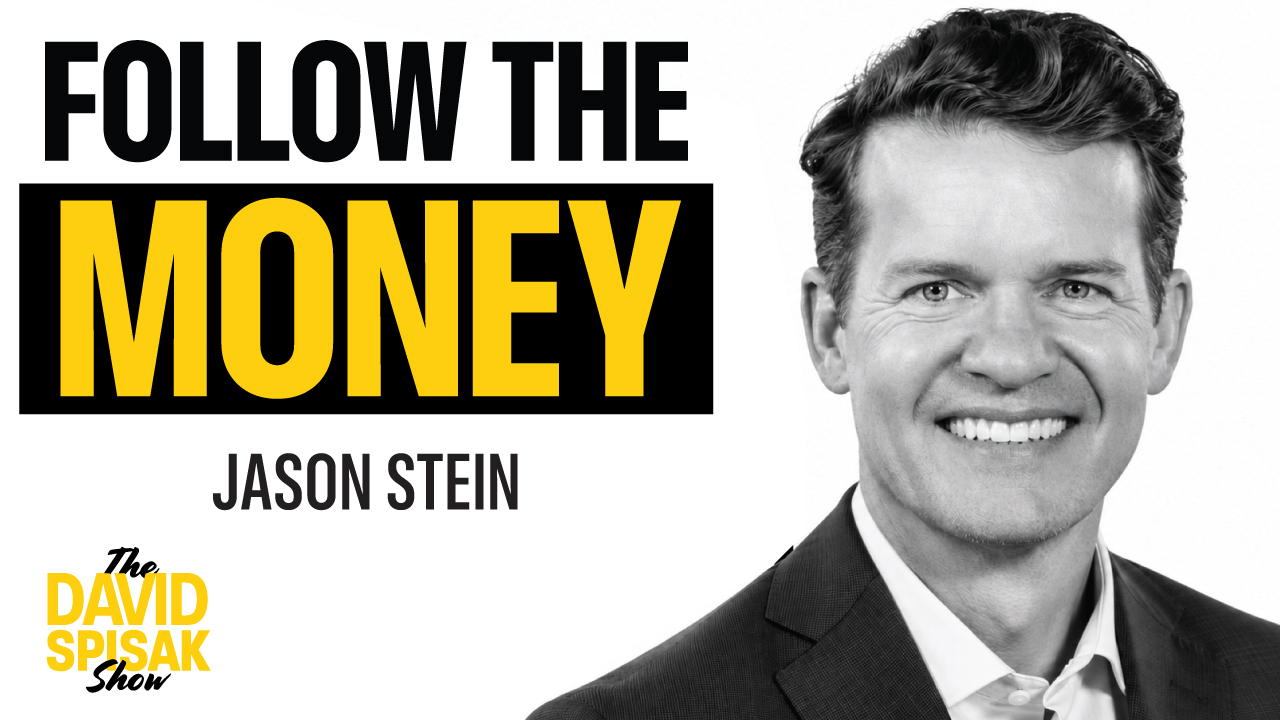 |
Where the Smart Money Is Moving in Automotive
September 17 • 48m
Jason Stein spent three decades in automotive media, most recently as publisher of Automotive News across Detroit, Europe, Canada and China, before moving into investment banking. He is Managing Director and Partner at the Presidio Group and hosts SiriusXM's Cars and Culture.
Where capital is flowing in automotive retail right now, what those flows reveal about where the industry is headed, and whether AI is genuine transformation or marketing hype. Jason also shares what he has learned building Presidio's Auto Technology Summit, where C-suite executives and founders spot opportunities before the broader market does.
Why it belongs in this issue: capital is the earliest signal of which technology bets will last. Before you sign your next six-figure technology contract, hear where the people who price these companies think the value is actually moving.
| Connect with Jason Stein | |
|

Listen to the full episode on: YouTube | Spotify | Apple Podcasts
| Let's Get Social |
Are you tracking where every single marketing dollar goes, or is your dealership quietly wasting millions?
In my latest conversation with John Fitzpatrick, CEO and President of Force Marketing, we dive deep into the massive blind spots in automotive advertising. Too many dealers are still relying on outdated vanity metrics and "spray and pray" marketing strategies that drain profitability.
If you cannot tie your ad spend directly to vehicle sales and service ROs, you are leaving millions of dollars on the table. It is time to stop guessing and start leveraging your data to drive actual, measurable ROI.
Watch the full clip to see exactly where dealerships are bleeding money and how to pivot your strategy.
Where do you see the most marketing waste in the auto industry right now? Let me know in the comments.

| Hits & Misses |


▲ HIT - Good for Dealers
Look at what David Cerqueira at Benzel-Busch Mercedes-Benz did not do. He did not go shopping for a shiny new service platform. He put AI to work inside tools his team already runs: a CDK texting platform that about 30 of his 43 technicians use to polish customer texts, and Copilot to write warranty stories. Total repair order time dropped from 6.5 days to 4.3 days.
That is this issue's fixed ops lesson in one store. Find the friction, in this case slow and unclear customer communication, then make the technology remove it. Every day you take out of RO time is capacity you already pay for, handed back to your shop. – DS
▲ HIT - Good for Dealers
Recall events fell to a six-year low while affected units hit a five-year high: about 23.5 million in the first half, up roughly 112%, per Sedgwick's analysis of NHTSA data. That is warranty-paid traffic headed to your drive. Now read NHTSA's September 28 Federal Register notice. It is convening a November 5 meeting on recall completion, citing outdated owner information and hard-to-reach used-vehicle owners, and pointing to connected vehicles, mobile repair and over-the-air updates.
Translation: the data problem is yours to solve, or someone else will remove the visit. Clean your owner and VIN data, match it to your service lane and own the recall customer. – DS
▲ HIT - Good for Dealers
American Honda sold 121,796 units in September, up 15.9%, posted its best Q3 since 2019 and set a Q3 hybrid record of more than 106,000 units, all on 16 to 17 days of supply in key models. Toyota added a 58.2% electrified mix in September.
The lesson is not “sell hybrids.” It is that affordability and a balanced lineup beat incentive spending, and thin supply rewards stores that run a disciplined pre-sold pipeline. If you hold one of these franchises, your gross and turn are protected only if your allocation, deposit and customer communication process is as tight as your inventory. – DS

▼ Miss - Hard on Dealers
Pied Piper's 2026 study of 6,538 service requests found real improvement: the industry average rose 7 points and Volkswagen ranked first at 73. Then the part that matters. Sixteen percent of callers still couldn't book an appointment, and about one-third of AI-to-human transfers failed. Customers got stuck on hold, in phone trees, in AI loops or in voicemail.
That is the vendor-first mistake in your service lane. The AI was bought. The handoff was never designed. Before you add another scheduling tool, call your own store, try to book, and time how long it takes a human to pick up the customer the AI could not help. – DS
▼ Miss - Hard on Dealers
California's Combating Auto Retail Scams Act (SB 766) took effect October 1. Total price must appear in ads and in the first written response to an inquiry, including dealer price adjustments and installed items. Used vehicles at $50,000 or less carry a three-day, 400-mile cancellation right, with refunds due within 48 hours. Add-ons must be labeled optional in writing, and records must be kept for two years.
This is not a forms update. It is a workflow and data problem from ad to contract, and every disconnected system in your stack is a place the evidence chain breaks. Dealers outside California should study it, not ignore it. – DS
▼ Miss - Hard on Dealers
Consumer Reports and Northeastern University tested 21 vehicles and 30 automaker apps. Twenty-eight of the 30 apps sent data to outside advertising and analytics companies, and seven shared personally identifiable information, including owner names, VINs and precise locations. Top recipients included Amazon, Google, Meta and Microsoft.
This is an OEM story that lands on your showroom floor, because the customer asking “where does my data go?” is asking your salesperson and your F&I manager. Every integration in your stack moves customer data somewhere. Know where it goes, who controls it and what you would say if a customer asked. Trust is part of the architecture. – DS
About Disruptive Intelligence
Disruptive Intelligence is a biweekly newsletter delivering dealer-tested, data-backed strategies you can implement at your store right away. Take action on what's here and you're guaranteed to see your dealership's results improve in 2026 (and beyond).
© 2026 Disruptive Intelligence