

Welcome to Disruptive Intelligence
Disruptive Intelligence delivers dealer-tested, data-backed strategies guaranteed to improve your dealership's results in 2026 (and beyond).
Presented by:


Everyone is talking about new cars.
Everyone is talking about used cars.
Inventory. Affordability. EVs. Tariffs. Interest rates. Take your pick.

Meanwhile, the people in the department generating the most net profit in your dealership are quietly sitting in the corner, hoping somebody notices their impact. The department I’m talking about is Fixed Operations. In most dealerships, fixed ops ranks third in revenue behind new and used vehicle sales. But when you look at net profit? It's sitting at the top of the leaderboard.
Which raises an interesting question: Why do so many dealers spend their time obsessing over the departments that generate the most revenue while largely overlooking the department that generates the most profit? Because that's exactly what's happening.

One reason I suspect GMs tend to overlook fixed ops is that it’s human nature to focus on what we know. Roughly 90 out of 100 GMs came up through sales, not service and parts. They know the variable department cold, but when the conversation shifts to fixed operations, their confidence drops. The majority of GMs have never written a repair order or a parts ticket in their life. So they hire “a service guy” and say, “take care of this for me,” then head back to the side of the business they’re comfortable with. The result? The most profitable department in the dealership is often the least understood by the person running the store, and the people in the back feel it. The fix? It’s time for GMs and leadership to roll up their sleeves and educate themselves on their most profitable department.
Dealers willing to do that will create massive opportunities for their stores.

The irony is that fixed ops isn't just the most profitable department in most stores. It's also the department that's faced some of the most significant headwinds over the past five years. While the industry was focused on inventory shortages, vehicle affordability, and the chip crisis, fixed operations has been quietly fighting its own battles. Battles most people never even noticed.
The fact that new-vehicle sales have fallen from roughly 17.5 million units annually to about 15.5 million doesn't just affect the sales department; it also affects service. Every vehicle not sold today is a future service customer that never enters your ecosystem. Over multiple years, that represents millions of lost units in operation. Millions of customers without a warranty. Millions of future service opportunities that simply disappear. At the same time, service departments have been battling parts shortages, delayed repairs, technician shortages, increasing vehicle complexity, new training requirements for technicians, and rising customer expectations. In other words, the department carrying a dealership’s profitability has been doing so with one hand tied behind its back.

The good news is that when you think differently, you can turn a headwind into a tailwind.
The future of fixed operations isn't built on better waiting rooms. It's built on trust. I've written extensively about transparency regarding pricing, advertising, disclosures, and F&I over the last several months. But transparency matters as much in service. Maybe more.

Historically, service has operated like the Wizard of Oz. Customers aren't allowed into the shop.
They can't see the repair. They don't understand the diagnosis. They're simply asked to trust what's happening behind the curtain. That's a difficult ask. Especially when the average customer knows very little about modern vehicle repair. Which is why video inspections are such a powerful tool. Not because they're trendy. Because they create transparency. When a customer can actually see the leaking gasket, the worn brake pads, the damaged suspension component, or the safety concern you found during an inspection, something changes. Trust increases. Confidence increases. Approval rates increase. The customer no longer feels they're being sold to. They feel like they're being educated. That's a massive shift. And in today's environment, it might be the biggest competitive advantage fixed operations has.

Customers don't want to spend 5-10 minutes making an appointment. They don’t want to wait three weeks to be seen. They don't want to rearrange their work schedule. They don't want to sit in a waiting room for three hours. And they definitely don't want to spend their afternoon wondering whether anyone is working on their vehicle. They want their time back. The dealers quietly winning fixed operations today understand this. They're implementing pickup and delivery. Mobile service. Digital communication. Real-time updates. Anything that removes friction from the ownership experience. Because customers don't actually want a nicer waiting room. They want to avoid the waiting room altogether.

More amenities don’t forgive the sin of wasting your customers' time. People aren’t going to forget their frustrations because you give them donuts, lattes, and Wi-Fi. What you need to do is figure out how to give your customers their time back. This is where the independent shops are kicking our a**es. That means figuring out processes that enable shorter lead times, tighter check-in processes, clear expectations about how long the work will take, and then actually hitting those marks. This is where technician capacity, smart staffing, and disciplined processes matter: you can’t give time back if you don’t have the hours to sell and the discipline to move cars through predictably. The best stores don’t try to convince customers to enjoy waiting; they work to make sure there’s less waiting to endure.

Fixed operations isn't your third-most-important department. It’s not just a support function. A reliable source of revenue. It's arguably your most important (and overlooked) investment. The question is whether you're treating it that way. Because the dealers who win over the next five years won't be the ones with the fanciest waiting rooms. They'll be the ones who leverage transparency to build trust; invest in technology and processes that save customers time; and use fixed operations to create a competitive advantage that competitors can't easily replicate.


Most people will read this article and think it’s about Right to Repair.
I think it’s about something much bigger.
The real battle isn’t over who can replace a part or perform a repair. It’s over who controls access to vehicle data, diagnostics, software, and ultimately the customer relationship.
For decades, dealerships have relied on proprietary tools, technology, and expertise to create value for consumers and generate the fixed operations profits that help sustain their businesses. As vehicles become increasingly software-defined, those advantages may be challenged in ways many dealers have not fully considered.
Whether you support or oppose Right to Repair, this is one of the most important automotive industry stories you’ll read this year because its implications extend far beyond service bays and repair orders.


Are dealers unknowingly leaking six figures a year through the service lane?
In this episode, David sits down with Mark Queen, Founder and CEO of Skaivision, for a practical, eye-opening conversation about dealership acquisition strategy, fixed ops performance, and the missed opportunities already driving onto the lot every day.
David and Mark discuss why many dealers are chasing more leads when the real growth opportunity may already be inside the service drive. They break down how timing, internal handoffs, and operational discipline can dramatically impact service-lane acquisition rates, customer retention, and profitability.
Mark also shares what millions of AI-driven customer conversations are revealing about buying signals, ghosted opportunities, and the moments where dealerships quietly lose ROI. From the $89 oil change to lifetime customer value, this conversation reframes fixed ops as more than a repair department — it’s a strategic growth engine.

Available on: Youtube | Spotify | Apple Podcasts


Why Drivers Leave Dealership Service Departments
In this TikTok, Leah Zecchino breaks down a common dilemma for vehicle owners: pay more for a dealership that specializes in the repair, or save money with an independent shop that may be less familiar with the job. When major transmission work is involved, the decision often comes down to more than just price—it comes down to confidence and trust.
Credit: Leah Zecchino (@zecchinoleah) via TikTok


▲ HIT - Good for Dealers


Here’s the line that should keep every dealer principal up at night — 80% of your buyers SAY they’ll service with you, but only 1 in 4 ever has that first appointment booked before they drive off your lot. That’s not a marketing problem. That’s a $12,000-per-customer process failure happening right under your nose. And the operators shrugging this off as “soft” data are the exact same ones who’ll wonder in three years why the independent down the street is eating their service drive alive.
▲ HIT - Good for Dealers
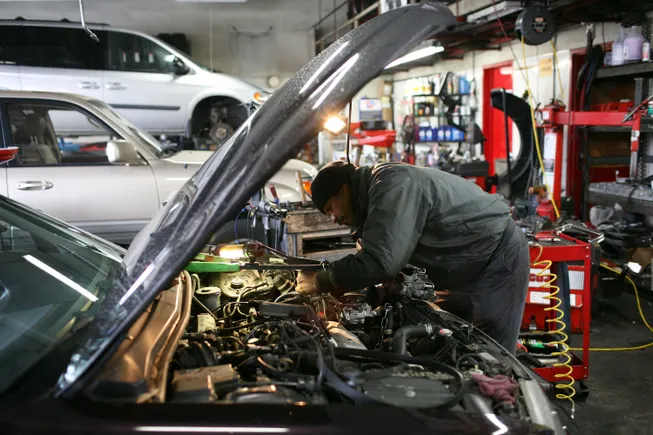

I’ve been preaching this for 45 years and it STILL doesn’t get the respect it deserves — service is the single most powerful sales tool in your building, and it isn’t close. A 70% repurchase lift from ONE good service visit? Show me a closing technique that does that. The dealers who finally get it are treating their service drive as their #1 customer acquisition channel — not as a necessary evil taking up space behind the showroom. And notice it’s an OEM executive saying it out loud, not a consultant. — DS


▼ Miss - Hard on Dealers


Don’t let the “satisfaction is up 3 points” headline lull you to sleep — the real story is buried in the numbers. Your customers are timing you, and the aftermarket is lapping you. 1.61 hours for a mass-market oil change while the shop across the street is done in 20 minutes? That’s not a satisfaction gap, it’s a structural one. And here’s the kicker: 64% of customers want photos and videos of their car, only 26% are getting them — even though we KNOW it drives an extra $230 per RO. We’re leaving trust AND money on the table at the very same time. — DS
▼ Miss - Hard on Dealers

This is the kind of story that never lands in a J.D. Power study but does WAY more damage — because it spreads on TikTok and Facebook to people who’ll never read a word about CSI scores. And it doesn’t matter one bit whether that $1,700 quote was actually fair. The perception is already written, screenshotted, and shared. The question every dealer needs to answer isn’t “was the independent cutting corners” — it’s “what’s our story when our customer sees THIS one before their next visit?” Because they will. — DS
About Disruptive Intelligence
Disruptive Intelligence is a biweekly newsletter that delivers dealer-tested, data-backed strategies that can be implemented at your store right away.
If you regularly take action on the information shared here, you are guaranteed to see your dealership's results improve in 2026 (and beyond).
© 2026 Disruptive Intelligence
A biweekly briefing for dealership leaders navigating the future of automotive retail.